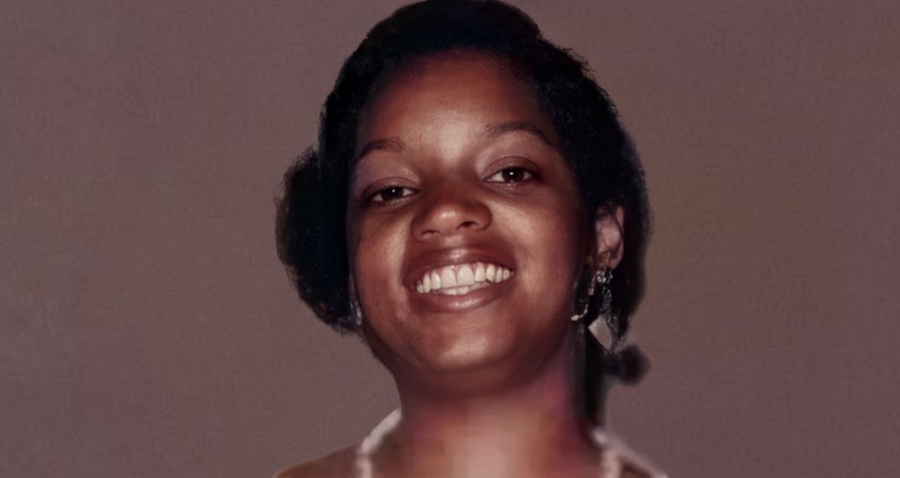
On February 24, 2000, Linda Fields, a 37-year-old woman and mother of three, was found dead in Racine, Wisconsin, in a case that would remain unsolved for more than two decades. Her body was discovered beneath the low-hanging branches of a pine tree in the front yard of a residence at 1132 Lake Avenue, near the intersection of 12th Street and Lake Avenue, not far from Gateway Technical College. A person walking a dog came upon her body and alerted authorities. Fields was fully clothed when she was discovered, and an autopsy conducted through the Milwaukee County Medical Examiner's Office determined that she had died from strangulation. Her death was classified as a homicide, launching an investigation that would ultimately span more than 23 years before police identified and arrested a suspect.
For her family, the discovery marked the beginning of decades of grief, uncertainty, and unanswered questions about what had happened during her final hours.
From the beginning, investigators faced a difficult challenge. Although police collected several biological samples from Fields' body, they could not identify the person responsible for her death. Forensic testing completed in May 2001 established that the recovered DNA came from a single unidentified male. Investigators entered the genetic profile into Wisconsin's DNA databases and the national law enforcement database, but no match was found. Racine Police Investigator Steve Mich initially led the investigation, interviewing numerous witnesses and pursuing possible leads. Over the years, detectives identified five potential suspects and obtained DNA samples for comparison, but all five were eliminated when their genetic profiles failed to match the evidence. The investigation was reassigned in 2005 and again in 2012, with additional evidence submitted for laboratory testing. Despite these efforts, the identity of the person responsible remained unknown. Fields' family continued living without answers, while her case became one of Racine's longstanding unsolved homicides.
A significant turning point came in August 2020 when then-Racine Police Chief Art Howell directed investigators to take another look at the case. Investigator Christopher Blackmore was assigned to review the evidence, working alongside Special Agent Neil McGrath of the Wisconsin Department of Justice's Division of Criminal Investigation. Recognizing that advances in forensic technology might offer opportunities unavailable to earlier detectives, the investigators consulted with the Wisconsin State Crime Laboratory and the FBI. By April 2021, analysts determined that enough biological evidence remained to pursue investigative genetic genealogy. A sample was sent to Othram, a forensic DNA laboratory specializing in advanced genetic analysis. In January 2022, investigators also determined that a familial DNA search could help identify close relatives of the unknown individual whose DNA had been recovered. This approach eventually produced a promising lead, allowing detectives to investigate family relationships connected to the unidentified genetic profile. Investigators examined a brother and subsequently focused on his father, whose movements were traced from Alabama to Zion, Illinois.
In February 2023, investigators obtained a DNA sample from the father, identified as Lucas Ascencio Alonso, who was then living in Zion and working in Racine. Laboratory testing established that his DNA matched the evidence recovered from Fields more than two decades earlier. According to police, the probability of an unrelated, randomly selected individual having the same DNA profile was approximately one in one quadrillion. Investigators had also conducted a traffic stop on February 23, 2023, during which Alonso was a passenger in a vehicle near Douglas Avenue and Layard Avenue in Racine. The investigation ultimately resulted in his arrest in early March 2023. On March 8, authorities publicly announced that Alonso had been charged with first-degree intentional homicide in connection with Fields' death. Alonso, who was 66 at the time, appeared in Racine County Circuit Court, where his cash bond was set at $1 million. The arrest represented the first major breakthrough in a case that had remained unresolved for more than 23 years.
Following his identification, Alonso provided investigators with an account of his encounter with Fields in February 2000. According to the criminal complaint, he recalled meeting her at a bar near Seventh Street and Center Street in Racine, where they had been drinking. He stated that they left the establishment together and received a ride to the lakefront area, eventually reaching a location along Lake Avenue. Alonso told detectives that the two engaged in sexual activity outdoors and that he placed his hands around Fields' neck. According to his statements, she asked him to stop, but he continued choking her. He claimed an argument followed and that she began striking and pushing him, causing him to become angry and place his hands around her neck again. Alonso acknowledged choking Fields to the point that she could not breathe. However, he maintained that when he left the area, he believed she was still alive because she had reportedly been yelling at him. Investigators and prosecutors regarded these admissions, together with the DNA evidence and the medical examiner's finding of strangulation, as central evidence in establishing his responsibility for her death. His account was his own description of the encounter and did not change the medical determination that Fields had died as a result of homicidal violence.
News of the arrest brought a complicated mixture of relief, sorrow, and renewed memories for Fields' surviving family members. Her youngest sister, Kathy, spoke publicly about the pain of losing her older sister, whom she remembered as a role model. Fields' son, Carl Fields, described how his mother's death had profoundly affected his childhood and shaped the course of his life. He had spent years hoping that advances in technology might eventually reveal who had killed her. At the time of the arrest, he explained that the family had carried its suffering quietly for many years and viewed accountability as an important part of the healing process. He also emphasized forgiveness and the importance of moving forward rather than allowing the tragedy to define the remainder of his life. For relatives who had waited through numerous investigative reviews and years without meaningful developments, the identification of Alonso finally provided an answer to a question that had haunted them since 2000.
The case ultimately reached a resolution in 2026. In August 2026, Lucas Ascencio Alonso entered a no-contest plea to second-degree reckless homicide, a lesser charge than the first-degree intentional homicide allegation originally filed against him. Racine County Circuit Court Judge Robert Repischak accepted the plea and found Alonso guilty. By entering a no-contest plea, Alonso did not formally admit guilt through the plea itself, but he permitted the court to enter a criminal conviction and impose a sentence. The resolution eliminated the need for a contested criminal trial and brought the prosecution closer to its conclusion more than 26 years after Fields' death.
On November 16, 2026, Judge Repischak sentenced Alonso to 10 years in prison followed by five years of extended supervision. During the sentencing hearing, Alonso addressed the court through a Spanish interpreter and acknowledged that although he was uncertain whether Fields had died at the moment he placed his hands around her neck, he knew that she had died. The judge directly confronted him about his actions, emphasizing that he had exercised control over Fields' ability to breathe and had taken her life. Members of the Fields family attended the hearing, including Carl, who addressed the court about the lasting consequences of his mother's death. Rather than requesting a longer prison sentence, Carl expressed that additional years of incarceration would not necessarily produce a greater sense of justice. He instead asked that Alonso receive whatever assistance and rehabilitative services were available to him. Carl, who has worked as a criminal justice advocate, also reflected on his mother's love for Racine and the influence she continued to have on his life.
The sentencing brought a legal conclusion to one of Racine's decades-old cold cases, although it could not reverse the loss experienced by Fields' children, siblings, and other loved ones. Investigators had spent years preserving evidence, revisiting old leads, and applying emerging forensic techniques before finally identifying the man responsible. The eventual conviction demonstrated how evidence collected at a crime scene can remain crucial long after an investigation appears to have reached a dead end. For Fields' family, the outcome represented both an acknowledgment of the injustice she suffered and an opportunity to begin another stage of healing. What began with the discovery of her body beneath a pine tree along Lake Avenue on February 24, 2000, ended more than 26 years later with the conviction and sentencing of Lucas Ascencio Alonso for second-degree reckless homicide. Although the passage of time can never restore the years Fields was denied or erase the grief of those who loved her, the resolution ensured that her death would no longer remain an unanswered question and that the person held legally responsible would face the consequences of his actions.