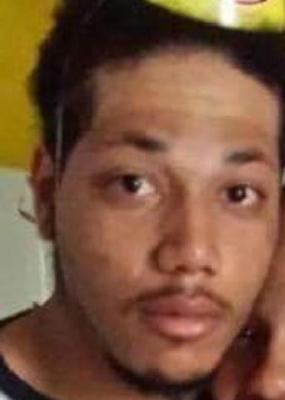
In the autumn of 1974, a young man named Robert Holston was just 22 years old, with his life ahead of him. Little is publicly remembered about the specifics of his life—his work, his family, his dreams—but his name is permanently etched into the public record of Boston’s most tragic unsolved crimes. He was a young male resident of a city grappling with profound social and political change, living in the large, diverse neighborhood of Dorchester. For those who knew and loved him, his absence created a void that has remained for decades, a private grief that became a cold, public statistic.
On the evening of Thursday, September 19, 1974, the Boston Fire Department and Boston Police were dispatched to 97 Lucerne Street in Dorchester, a residential street lined with the triple-decker homes characteristic of the neighborhood. They were responding to reports of a fire that had broken out at the address.
As firefighters worked to control the blaze, they made a grim discovery inside the structure. They found Robert Holston, who was pronounced deceased at the scene.
In the initial chaos of the fire, the cause of Robert’s death was not immediately clear. However, once the scene was secured and an autopsy was performed by the Office of the Chief Medical Examiner, the case took a dark turn. Medical experts determined that Robert had not perished as a result of the fire. Instead, the evidence showed he had been the victim of a violent act. His death was officially ruled a homicide. The fire, investigators concluded, was likely set intentionally to destroy evidence and conceal the true nature of the crime.
The investigation into Robert Holston's murder was launched by the Boston Police Department. Detectives in 1974 faced a challenging environment. Boston was a city on edge, embroiled in deep social unrest, and forensic science lacked the sophisticated tools, such as DNA analysis, that are now standard in homicide investigations. Evidence collected from the fire-damaged scene on Lucerne Street would have been difficult to analyze, and witnesses in any crime, particularly a violent one, were often hesitant to come forward. Despite their efforts, the initial investigation yielded no arrests, and the case gradually grew cold.
Over the years, Robert's case was passed down through generations of homicide detectives. It remains an open and active file within the Boston Police Department's Unsolved Homicide Unit. This special squad is dedicated to re-examining cold cases, hoping that new technology, a fresh perspective, or a long-overdue witness statement might finally provide a breakthrough. Cases like Robert’s are periodically reviewed, with investigators looking for any piece of evidence that might be re-tested or any lead that was not fully exhausted.
Decades have passed since Robert Holston was killed, and the world has changed immeasurably. The house on Lucerne Street may look different, and the neighborhood has evolved, but the fundamental injustice of a life cut short remains. For the police, the case is a puzzle waiting for its final piece. For a family that has waited half a century, it is a wound that has never fully healed. As of today, the murder of Robert Holston is still officially unsolved. The Boston Police Department continues to list his case, a silent appeal for anyone with information, no matter how insignificant it may seem, to finally come forward and help deliver the justice that Robert has been denied for so long.