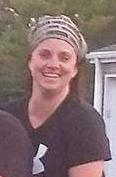
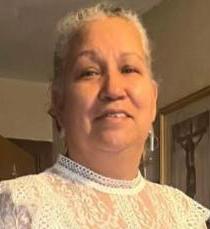
Wilma June Nissen had a deeply troubled and tragic start to life. Born in San Francisco, California, she and her disabled sister were abandoned by their mother and left in the care of their father. He was neglectful, often locking the two young girls in a closet while he went to work. After he lost his job, the family lived in a car, where her sister was sometimes locked in the trunk while a nine or ten-year-old Wilma wandered the streets searching for food. She never had the chance to be a child. Eventually, Child Protective Services intervened, and at age 10, Wilma entered the foster care system in 1964. Separated from her sister, she was placed with a foster family who discovered she lacked the most basic skills; she could not read, write her own name, or even use a fork.
Though her time in foster care was reportedly an improvement, she moved between several homes, never finding true stability.
As a young woman, Wilma June Nissen, a 23-year-old White female, struggled to support herself. She had two children who were taken into the system before she married the biological father of her third child, a daughter named Krissi, who was born in August 1977. Fearing her third child would also be taken, Wilma left the hospital after giving birth and never returned. Krissi was adopted and raised by Wilma's last foster parents, the same couple who had taken Wilma in years before.
For nearly three decades, Wilma's daughter grew up wondering about the mother she never knew, fantasizing about a future reunion. That dream was shattered in February 2006 when a friend's mother showed her a small newspaper article. An unidentified Jane Doe, found in a ditch in Iowa 27 years earlier, had finally been identified through fingerprints as Wilma June Nissen. For all those years, the people of Rock Rapids, Iowa, knew the unknown woman simply as "Our Girl." Her badly decomposed body had been discovered by a 19-year-old utility worker laying cable along a rural, unmaintained gravel road off Highway 182 in Lyon County on October 4, 1978. Hidden by six-foot-tall weeds, it was believed she had been there since July or August of that year. Investigators found a rope at the scene, which they believed was used to drag her body into the ditch, but little other evidence. The cause of death has never been publicly released.
The case went cold for decades. No one had ever reported Wilma missing. In the 1970s, investigators were able to lift two usable fingerprints, but without a national database, they had no way to match them. In the early 2000s, the Lyon County Sheriff’s Office decided to run the prints again, this time through a nationwide system. The search yielded a match to a prior arrest record for prostitution in California. On January 31, 2006, "Our Girl" finally had her name back. Her identity transformed the investigation, giving detectives a past to uncover and a path to follow. DNA tests soon confirmed that the Jane Doe was Krissi's mother.
Investigators pieced together Wilma's final months. In the spring and summer of 1978, she had traveled from California to Sioux Falls, South Dakota, near the Iowa border. There, she was working for an escort service that used names like "Playgirls" and "Playmates." Detectives believe she was hired, along with other women, to work at sex parties being held in western Lyon County. It was at one of these parties, investigators believe, that Wilma was murdered. The motive was likely robbery. Her body was then driven several miles away and dumped in the ditch where she was later found.
Over the years, the investigation, led for more than a decade by now-retired Chief Deputy Jerry Birkey, developed persons of interest. In 2016, the Lyon County Sheriff’s Office released a photograph from the mid-1970s of a woman they believe was responsible for Wilma's death. This primary suspect, known by the street name "Sugar," was a fellow escort and dancer known to have a history of robbing other women. While authorities knew her real name and had interviewed her, they did not release it publicly. Investigators also believe this woman did not act alone. The cause of death suggested a second person was involved, another female dancer who went by the stage name "Peaches." She was described as a light-complexioned Black woman from Thunder Bay, Canada.
Despite identifying suspects, no arrests have ever been made. DNA testing on items found with Wilma's body showed a mixture from multiple contributors and was not sufficient to advance the case. Wilma's daughter has dedicated herself to finding justice for the mother she never met. "I doubt I’ll ever know why, but I at least want to know who," she said. She hopes that someone who attended those parties in 1978 and saw something will finally come forward. Retired detective Birkey believes there are people who know what happened. "They didn't see Wilma get killed at this party," he stated. "They saw something that led up to her being killed and they just don't realize what they saw."
As of September 2025, the Lyon County Sheriff’s Office confirmed that the homicide of Wilma June Nissen remains an open and active investigation. Decades have passed, but for a daughter still grieving a mother she never knew, the fight for justice continues. Anyone with information about the murder of Wilma Nissen, or the women known as "Sugar" and "Peaches," is urged to contact the Lyon County Sheriff’s Office at (712) 472-8300. The case number is 78-06487.