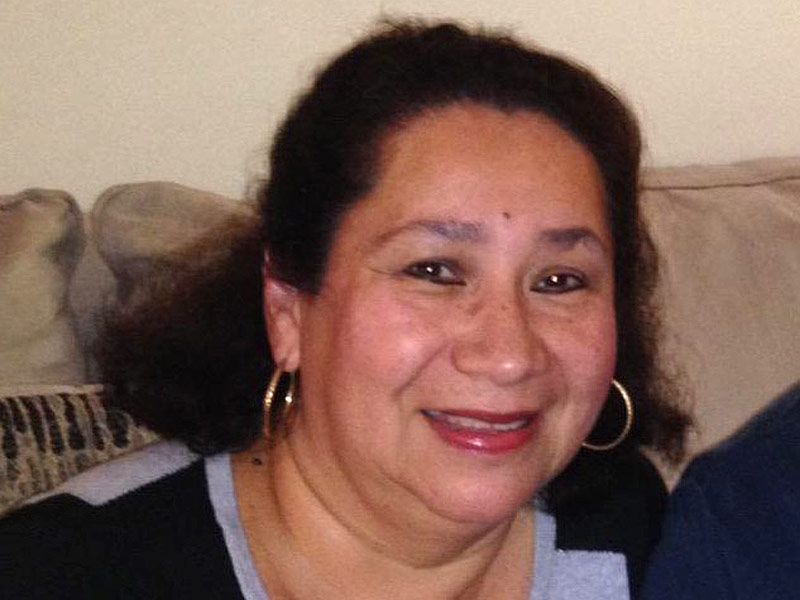
Chandra Ann Levy was an ambitious and fun-loving 24-year-old with dreams of joining the FBI or becoming a lawyer. Born in Cleveland, Ohio, she grew up in Modesto, California, where her parents, Robert and Susan Levy, remembered her as individualistic and driven. After earning a degree in journalism from San Francisco State University, she enrolled in a master's program for public administration at the University of Southern California. In October 2000, as part of her studies, she moved to Washington, D.C., for a paid internship with the Federal Bureau of Prisons. Her supervisor was impressed with her work, particularly her handling of media inquiries related to the upcoming execution of Oklahoma City bomber Timothy McVeigh.
In the spring of 2001, with her internship and master's degree requirements completed, Chandra was preparing to return to California for her graduation ceremony. She was last seen on May 1, 2001.
When her parents hadn't heard from her in five days, they contacted the Metropolitan Police Department of the District of Columbia (MPD). A search of her Dupont Circle apartment revealed her wallet, credit cards, and mobile phone left behind in her purse. Her suitcases were partially packed. Computer experts eventually reconstructed her internet history from the morning of May 1, which showed searches for airline websites, a weather report, and information about Rock Creek Park, a large urban oasis in the city.
The investigation into her disappearance quickly drew intense national media attention, which focused on her relationship with U.S. Representative Gary Condit, a married Democrat from her California district. Chandra had told her aunt she was having an affair with a congressman. Though Condit initially did not publicly admit to the relationship, he privately confirmed it to investigators. Police eventually cleared him of any involvement in her disappearance, but the scandal cost him his political career, and he lost his bid for re-nomination in 2002. For more than a year, there were no answers. Then, on May 22, 2002, a man walking his dog in a remote, wooded area of Rock Creek Park discovered the skeletal remains of Chandra Levy. A cause of death could not be definitively determined.
The case went cold for years until a series of investigative articles in The Washington Post in 2008 prompted police to take a new look at a man named Ingmar Guandique. Guandique, an undocumented immigrant from El Salvador, had been convicted of assaulting two other women at knifepoint in Rock Creek Park around the time Chandra vanished. In March 2009, authorities issued a warrant for his arrest in connection with Chandra's death. Prosecutors built a case alleging that Guandique had attacked and tied up Chandra in the park, leaving her to die. With no forensic evidence linking him to the crime, the case relied almost entirely on the testimony of a jailhouse informant, Armando Morales, who claimed Guandique had confessed the murder to him while they were cellmates.
In November 2010, a jury found Ingmar Guandique guilty of first-degree murder, and he was sentenced to 60 years in prison. Chandra's mother, Susan Levy, spoke at the sentencing, saying, "You will never know the pain you caused my family." However, the conviction did not stand. In 2015, Guandique was granted a new trial after his lawyers argued that prosecutors had withheld information that undermined the credibility of their star witness, Morales. As they prepared for the new trial, prosecutors faced a significant setback when Morales was reportedly captured on tape admitting he had lied during the original trial.
On July 28, 2016, the U.S. Attorney's Office announced it was dropping all charges against Guandique, stating they could no longer prove the case beyond a reasonable doubt. The move was a stunning reversal that left the high-profile case without a resolution. Guandique was released from prison and, after losing a bid to remain in the United States, was deported to El Salvador in May 2017.
As of November 2026, the murder of Chandra Levy remains officially unsolved and is classified as a cold case by the Metropolitan Police Department. No new suspects have been publicly identified, and the questions that have haunted her family and the nation for more than two decades are still without answers.