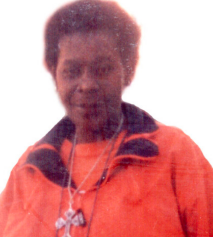
In the winter of 1941, a shadow of fear stretched across Washington, D.C., a terror that would later take the name Jarvis Theodore Roosevelt Catoe, “The D.C. Strangler.” For years, he moved through the city, preying on women, his violence escalating with each life he took. One of these lives belonged to Ada Puller, a Black woman who was murdered on January 22, 1941.
Her death was the fifth in a string of killings of African American women that had, until that point, garnered little public outcry or significant police progress.
Ada’s story is tragically obscured by the passage of time and the focus on her killer. Details of her life—her passions, her family, her work—are not part of the public record. What is known is that she was a victim of a predator who used charm and deception as his primary weapons. Catoe, a South Carolina native who had moved to D.C. in 1929, often posed as a handyman to gain access to his victims' homes or offered rides to women who mistook him for a taxi driver. Once he had earned their trust and isolated them, he would strangle them.
For six years, from 1935 to 1941, Catoe’s violent spree went largely unchecked. His early victims, including Ada Puller, were all Black women. Following Ada’s murder, Catoe’s choice of victims shifted, and he began targeting white women. This shift brought a new level of intensity and public pressure to the investigation. The murder of Rose Abramovitz, a newlywed killed in her home in March 1941, and Jesse Strieff, a War Department secretary, in June, caused a panic in the city and led to a police shake-up and a Congressional investigation.
The breakthrough in the series of terrifying crimes came not from Washington, but from New York. In August 1941, Catoe murdered a waitress named Evelyn Anderson in the Bronx and stole her wristwatch. When he gave the watch to a girlfriend, who then had it pawned, New York police were able to trace the item back through its handlers. The trail led them directly to Washington, D.C., and to Jarvis Catoe, who was arrested on August 29, 1941.
In custody, Catoe confessed to a shocking number of crimes. He admitted to killing at least eight women in D.C. and New York, though he suggested the total could be around ten. He recounted the details of his attacks with a chilling gentleness, explaining that he was troubled by "spells." His confession closed multiple cases, including the murder of Ada Puller and that of Florence Dancy in 1935, a crime for which another man had been wrongfully convicted and was serving a life sentence.
Although he confessed to many murders, Jarvis Catoe was tried for the murder of Rose Abramovitz. The jury took only 18 minutes to convict him of first-degree murder and rape. He also faced multiple counts of indecent exposure. Catoe was sentenced to death. He later recanted his confessions, claiming he had been coerced by police, but his appeal was denied.
On January 15, 1943, Jarvis Theodore Roosevelt Catoe was executed in the electric chair at the D.C. Jail. His execution ended a reign of terror that had claimed the lives of at least eight women, including Ada Puller. While justice was served for the man responsible, the stories of his victims, particularly the early African American women whose deaths were so long overlooked, remain incomplete—a quiet testament to a life cut tragically short.