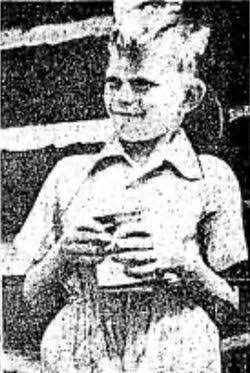
Kevin Pacsai was born with a full head of dark hair, a seemingly perfect baby boy to his young parents, Laurie Pacsai and Kevin Garnett, both 21. But just two weeks into his life, Kevin’s heart began to fail. He was eventually transferred to the world-renowned Hospital for Sick Children in Toronto, a place families from all over the globe trusted with the lives of their most vulnerable children.
His parents were told he had an abnormally rapid heartbeat but was expected to be released within a couple of days. Instead, on March 12, 1981, after just 25 days of life, Kevin was pronounced dead. His sudden death, and his father's intense grief and suspicion, would be the catalyst that finally brought a hidden crisis into the open.
For months, a shadow had been growing over the hospital's cardiac unit. Between June 1980 and March 1981, the mortality rate on wards 4A and 4B had spiked by a staggering 625 percent. An internal investigation had been conducted, but the deaths were attributed to the infants' fragile health conditions, and the alarming trend continued. Nurses on the ward whispered about a "jinx team," a group of staff whose shifts seemed to be cursed with tragedy. Many of the babies, while critically ill, had been expected to improve and eventually go home. Instead, they were dying suddenly from heart failure, unable to be resuscitated.
Kevin Garnett, devastated and disbelieving, refused to accept the explanation for his son's death. He banged on a senior cardiologist's office door, demanding to know why his son was gone. This raw display of a father's anguish prompted the hospital to finally involve the Metro Toronto coroner, Dr. Paul Tepperman. An initial autopsy on Kevin showed nothing suspicious. However, four days later, further tests revealed a shocking discovery: the level of the heart medication digoxin in Kevin’s system was about 13 times higher than a normal therapeutic dose. This discovery connected Kevin’s death to a horrifying pattern. Another baby, four-month-old Janice Estrella, who had died in January, was found to have had lethal levels of digoxin in her system.
The police were called in, and a major homicide investigation began. Investigators soon focused on the nurses who worked in the cardiac unit, examining work logs and interviewing staff. The investigation culminated in the arrest of Susan Nelles, a 24-year-old nurse on the ward, on March 31, 1981. She was charged with the first-degree murders of four babies, including Kevin Pacsai, Justin Cook, Janice Estrella, and Allana Miller. The idea of a "killer nurse" preying on helpless infants stunned the city of Toronto and sent shockwaves through the medical community.
The case against Nelles, however, began to unravel during a preliminary hearing in 1982. It was discovered she had a solid alibi for one of the deaths she was charged with, and the judge ultimately dismissed all charges against her, stating that a conspiracy between multiple nurses was not credible. The lead detective on the case resigned in the aftermath. No one else was ever charged in connection with the deaths.
In 1983, the Ontario government launched a public inquiry, the Grange Commission, to investigate the deaths and the hospital's handling of the crisis. After 18 months of testimony, the commission released a report in 1984 that was deeply critical of the hospital's lax drug controls and failure to act on the spike in deaths. The report concluded that eight of the deaths, including Kevin Pacsai's, were homicides caused by deliberate digoxin overdoses, and that up to 21 deaths in total were suspicious.
Decades later, the deaths at the Hospital for Sick Children remain one of Canada's most disturbing unsolved medical mysteries. An alternative theory has been proposed that a chemical, leached from rubber tubing used in medical equipment, could have been mistaken for digoxin in tests. For the families of the victims, there has been no closure. The case of Kevin Pacsai, a baby whose life was cut tragically short, serves as a haunting reminder of a time when a place of healing became a place of fear, and a father's refusal to stay silent exposed a series of unthinkable crimes that have never been solved.