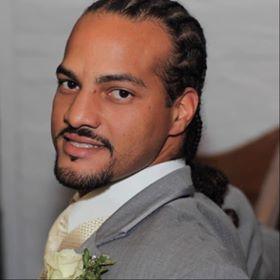
In the winter of 1911, a wave of terror swept across the railroad towns of Louisiana and Texas, leaving a trail of slaughtered families and a legacy of fear. One of the earliest of these brutal attacks claimed the life of Alexander Andrus, a 30-year-old Black man, and his entire family in Lafayette, Louisiana. The crime was part of a string of at least 15, and possibly as many as 49, killings attributed to a serial killer the press would dub the "Mulatto Axe Murderer."
On the morning of
February 24, 1911, a horrific discovery was made at the Andrus family home. Alexander, his 29-year-old wife Mimi, and their two small children, three-year-old Joachim and 11-month-old Agnes, were all found dead in their beds. They had been bludgeoned with an axe, the chosen weapon of a killer who entered homes in the dead of night and wiped out entire families. The motive was never robbery, as valuables were consistently left untouched at the crime scenes that stretched along the Southern Pacific railroad line.
Alexander Andrus was a former coal shoveler for the Southern Pacific, a job he had once shared with a neighbor named Raymond Barnabet. Some reports suggested the two men had argued prior to the murders. This connection brought immediate suspicion upon the Barnabet family, who lived near the Andruses. Two days after the bodies were found, Lafayette Parish Sheriff Louis Lacoste arrested Raymond Barnabet, reportedly after the man's own mistress implicated him.
The evidence against Raymond was initially deemed insufficient, and he was released. However, the investigation took a strange turn in July when Barnabet's own children, Clementine and her brother, testified against him. They claimed their father had come home on the night of the murders with his clothes soaked in blood, boasting about what he had done. Based on his children's statements, Raymond was re-arrested and eventually convicted of the Andrus family murders.
But the killings did not stop. While Raymond Barnabet was in jail awaiting a retrial, another family was slaughtered in Lafayette in November 1911. The victims were Norbert Randall, his wife, and their children. Norbert was Alexander Andrus's brother-in-law. This new massacre cast serious doubt on Raymond's guilt and turned the investigation on its head. Suspicion now fell upon his 17-year-old daughter, Clementine Barnabet. A search of the room where she worked as a live-in housekeeper revealed blood-stained clothing, leading to her arrest.
In custody, Clementine made a series of shocking and often contradictory confessions. She claimed to be the leader of a "Church of Sacrifice," a voodoo-practicing cult that she alleged was responsible for the murders as part of a ritual for divine protection. She took responsibility for as many as 35 killings, including those of the Andrus family. Her sensational story, filled with tales of charms that made her invincible, became a media spectacle. However, historians have since questioned the validity of her confession, pointing to inconsistencies and the racially charged, sensationalist press coverage of the time. Clementine was convicted of one murder and sentenced to life in prison, only to be released in 1923, after which she vanished from all records.
The murder of Alexander Andrus and his family was never officially solved with certainty. It remains a chilling chapter in a year-long reign of terror that targeted Black and mixed-race families. While a father and daughter were held responsible at different times, the truth of who wielded the axe in the Andrus home may have been lost to the fear, prejudice, and bizarre twists of one of Louisiana's most disturbing strings of unsolved crimes.