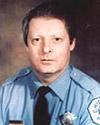
On the Friday that marked the beginning of Memorial Day weekend in 2018, the body of Lora Harbin was discovered in Chicago. A 44-year-old woman, she was found on May 25, 2018, in the West Garfield Park neighborhood on the city's West Side. An autopsy would later determine that the cause of her death was strangulation, a finding that placed her among a tragic and growing number of women who had died in a terrifyingly similar manner across the city.
Her homicide remains unsolved.
Lora was found outdoors, behind an abandoned building in the 4500 block of West West End Avenue. The specific address was later recorded as 4533 W. West End Avenue. The Chicago Police Department opened an investigation, but few details about the circumstances of the discovery were ever made public. There are no official reports on who found Lora, what time of day she was located, or how long she might have been there. It is also not publicly known when she was last seen alive or by whom.
Lora’s death immediately drew attention beyond its own tragic facts because of the alarming pattern it seemed to follow. Her case was one of at least four similar killings of women that occurred between May and September of 2018, all of whom were found outdoors on the city’s South or West sides. These deaths added to a horrifying tally that journalists and independent researchers had been tracking for years. Between 2001 and 2018, at least 75 women in Chicago were killed by strangulation or asphyxiation, with the majority of those cases remaining unsolved.
This cluster of unsolved homicides has led to the theory that one or more serial killers, sometimes dubbed the "Chicago Strangler," have been operating in the city for nearly two decades. The Murder Accountability Project, a nonprofit organization that analyzes homicide data, used a computer algorithm to identify a potential link between 51 of these unsolved cases, including Lora's. The project noted that the victims were often found in alleys, vacant lots, and abandoned buildings. Many of the victims were Black women, and some had histories involving sex work and drug use, a classic pattern for serial predators.
In the face of public pressure from activists and families, the Chicago Police Department assigned a team of detectives in 2019 to review the 51 cases identified by the Murder Accountability Project. However, authorities have never publicly confirmed that a serial killer is responsible, stating they have not found definitive evidence linking the slayings. Despite the lack of an official link, Lora Harbin is consistently named in media coverage and by community activists as one of the "Unforgotten 51," a name given to the group of victims to ensure their lives and unsolved cases are not ignored.
Very little about Lora Harbin’s personal life has been shared publicly. Her family has largely remained private in their grief. Her name was included in the Discovery+ documentary "The Hunt for the Chicago Strangler," and a person who identified as Lora's child later wrote on social media that they wished the documentary producers had contacted the family before including her story. For now, her memory is primarily kept alive by community advocates who refuse to let the city forget the women whose lives were cut short.
No arrests have ever been made in connection with Lora Harbin's murder, and no suspects have been publicly identified. Her case is one of dozens that leave families waiting for answers. While the vast majority of these strangulation cases remain cold, the 2020 arrest and subsequent conviction of Arthur Hilliard for the 2017 murder of Diamond Turner, another woman on the list of 51, provided a small measure of hope that, even years later, justice is still possible.