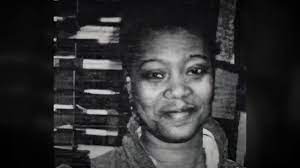
On the first day of February in 2006, the body of a woman was discovered in an alley near Palmer Square, a historic park in the northwest Chicago neighborhood of Logan Square. The victim was identified as 35-year-old Denise Torres, a female whose life had been violently cut short. An investigation determined that she had been strangled to death. Her body was found partially undressed, a grim detail that suggested a possible sexual motivation behind the attack and mirrored the circumstances of other women who had recently been killed in the city.
Denise’s death was not viewed as an isolated incident by those tracking a disturbing pattern of violence in Chicago. Her murder is one of more than 50 unsolved cases that have been identified as a potential cluster of homicides attributed to a possible serial killer, or killers, sometimes referred to as the "Chicago Strangler."
This series of slayings, which stretches from 2001 to at least 2018, has claimed the lives of at least 75 women. The victims were often found in desolate locations such as alleys, abandoned buildings, and garbage containers, left behind after being killed by strangulation or asphyxiation.
Investigators and researchers with the Murder Accountability Project noted similarities among the cases that suggested a connection. Many of the victims were Black women, and a number of them, like Denise, were described as living transient or high-risk lifestyles. These women were often vulnerable, moving through the margins of society, which may have made them targets. The consistent method of killing and the disposal of the bodies in similar, secluded spots across the city's South and West Sides pointed toward a potential serial predator.
Despite these patterns, the Chicago Police Department has not officially confirmed that a single individual is responsible for the entire cluster of murders. While activists and victims' families have pushed for the cases to be investigated as the work of one or more serial killers, officials have remained cautious, stating that no definitive evidence has linked all the homicides. Over the years, some of the 75-plus cases have been solved, leading to the convictions of several different men, which suggests that multiple offenders have used similar methods.
Sadly, very little public information is available about who Denise Torres was as a person. Beyond the brief description of her lifestyle, details about her family, her passions, her struggles, or the life she led before it was so cruelly taken have been lost to time. She is remembered primarily as one of the many women whose names are on a list of unsolved strangulations that have haunted the city of Chicago for nearly two decades. Each name represents a life ended, a story silenced, and a family left without answers.
Denise’s case remains unsolved. There have been no arrests and no suspects publicly named in her murder. Her death is a cold case, one of dozens that leave a lingering sense of fear and injustice in the community. The investigation into the string of strangulations continues, but for Denise Torres and many others, justice has remained elusive, their cases waiting for a breakthrough that will finally hold their killer, or killers, accountable.