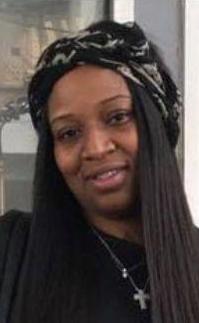
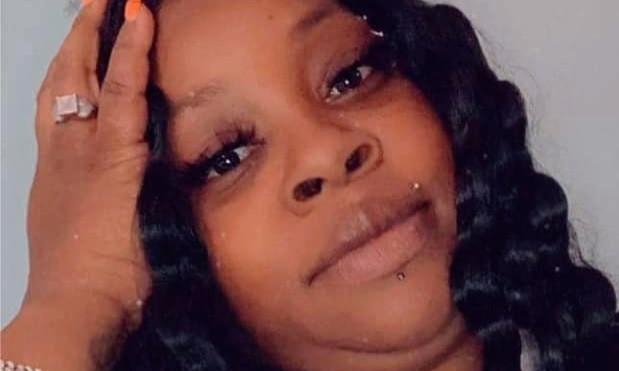
Gwendolyn Williams, known to her family as Gwen, was a protector with a "heart of gold." The oldest of six children raised by a single mother on Chicago's South Side, she took her role as guardian seriously. Born in Montgomery, Alabama, on October 6, 1957, Gwendolyn moved with her family to Chicago in 1965. Growing up, she was the one who babysat, cooked, and shielded her younger siblings from the dangers of the streets.
Her family remembers her as a fashionista and a dancer, a "peace, love and Soul Train child" who loved homemade grits and cornbread. Her sister described her as a fierce animal lover who was always there for her family when they needed her.
In her 44 years, Gwendolyn had been a wife to a Vietnam veteran who she later lost, and toward the end of her life, she faced some mental health challenges. Yet, her loyalty to her family never wavered. The night before she died, she was caring for her youngest sister, Sharon Pritchett, who was recovering from surgery. They stayed up watching movies, laughing, and Gwendolyn showered her sister's dogs with kisses, leaving a red lipstick mark on one of their faces. It was a tender, final memory for a family that would be shattered by a phone call the next morning.
On Wednesday, June 12, 2002, the body of Gwendolyn Williams, a Black woman, was found behind a Dollar Store in the 4800 block of North Sheridan Road. She had been brutally raped and strangled. Her body was discovered half-dressed and covered in blood. The scene told a story of a desperate struggle. Investigators found the killer's skin and DNA underneath her fingernails, evidence that Gwendolyn, who her family knew as a fighter, had fought for her life until the very end. "She was our protector," her sister Audrey Blinstrup said. "She kept us away from the streets and she kept the streets away from us."
Gwendolyn's murder is one of at least 51 unsolved killings of women in Chicago between 2001 and 2018 that have been attributed to a possible serial killer, or killers, dubbed the "Chicago Strangler." The victims were predominantly Black women, and the cause of death was almost always strangulation or asphyxiation. Their bodies were often left in alleys, abandoned buildings, or garbage cans. Despite the alarming pattern, the Chicago Police Department has not officially confirmed that a single serial killer is responsible for all the deaths.
For years, Gwendolyn’s case went cold, leaving her family in a state of perpetual grief. The loss was especially hard on her mother, Rosa Mae Pritchett, who was never the same after burying her firstborn child. She passed away in 2018 without ever seeing justice for her daughter. In a surprising turn, about 16 years after the murder, cold case detectives revisited the file and submitted the DNA evidence from under Gwendolyn's nails into an FBI database. The search yielded a match: a homeless man living in Florida.
Despite this significant break, the family's hope for a resolution was once again deferred. In 2019, the Cook County State's Attorney's Office announced it would not be filing charges. Prosecutors deemed the DNA evidence "insufficient to support criminal charges," citing a 2017 appellate court decision that limited filing charges based solely on the presence of DNA. The decision was another devastating blow to a family that had already waited so long for answers.
Today, Gwendolyn Williams' murder remains unsolved, another name on a long list of women whose lives were stolen. Her siblings continue to visit the place where her body was found, searching for answers and a sense of peace that remains elusive. "My sister didn't deserve the way she died," her sister Rose Pritchett said. "And it still hurts me to this day... You can't have closure when your wound is still open." Gwendolyn lies buried in a royal blue dress, her mother’s favorite color, not far from her mother on the city's South Side, forever remembered as the loving, true-blue protector of her family.