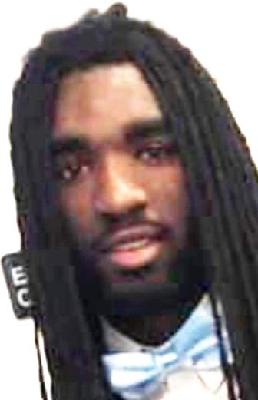
On August 18, 1998, the life of 36-year-old Keary Lea Gagnier, a female resident of Chicago, Illinois, was brutally cut short in what should have been the safety of her own home. Her death was not an isolated tragedy but part of a series of violent crimes that terrorized the Rogers Park neighborhood, committed by a man who would come to be known as the Rogers Park Strangler.
The senseless brutality of her murder left the community deeply shaken.
That evening, Ronald Hinton and a longtime acquaintance, Michael Sanders, were on the back porch of an apartment building in the 1200 block of West Pratt Avenue. Seeking money for drugs, they made their way to the third floor, where they noticed the back door to Keary’s apartment was open. They entered the residence, intending to commit a burglary. When Keary confronted the intruders in her kitchen, the situation escalated with horrific violence.
Hinton forced Keary into her bedroom, where he sexually assaulted her and ultimately strangled her to death. In his later confession, Hinton admitted that Keary fought courageously against her attacker. After the murder, the two men ransacked the apartment, stealing valuables such as a camcorder, jewelry, and movies before fleeing. They discarded her purse and personal identification in a nearby trash can, where the items were later discovered by sanitation workers, providing an early clue in a case that would initially stump investigators. Since the attack was a random home invasion and the perpetrators had no connection to Keary, police struggled for months to identify any suspects.
The break in the case came six months later, following the murder of another woman, 31-year-old Merceda Ares, on February 13, 1999. Hinton, Sanders, and a third man, David Wales, murdered Ares in her apartment and stole her belongings, including her bank card. When the men used the card at an ATM, they were captured on surveillance video. The images were broadcast on local news, leading to a crucial tip: Hinton's own third-grade daughter recognized her father and told her teacher, who promptly contacted the police.
Following their arrests in March 1999, DNA evidence collected from the scene of Keary's murder was matched to both Hinton and Sanders. This forensic link, combined with their confessions, definitively connected them to the crime. Investigators also linked Hinton to the 1996 murder of 17-year-old Felicia Mullins, confirming his status as a serial killer.
To avoid a potential death sentence, Ronald Hinton pleaded guilty to the first-degree murders of Keary Gagnier, Merceda Ares, and Felicia Mullins. In 2004, he was given three consecutive life sentences without the possibility of parole. Michael Sanders, who participated in the murders of Keary and Merceda, was convicted on an accountability theory for both crimes. He received two life sentences for his involvement.
Years later, Sanders sought post-conviction relief, supported by an affidavit from Hinton recanting his testimony that implicated Sanders. However, after an evidentiary hearing, Sanders's petition was denied in 2018, reaffirming his conviction. The case is officially closed, with both men responsible for Keary Gagnier's death remaining incarcerated.