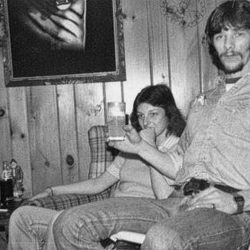
Russell F. Bailey, a 69-year-old man, lived in Wells, Maine, where he operated a gift shop and resided in a mobile home. Bailey was acquainted with Richard Edward Steeves, a convicted violent offender who had spent years moving between prisons and psychiatric institutions. Steeves had been released under supervision and returned to Maine before Bailey was killed in April 1985.
Bailey was found dead inside his home on April 19, 1985. Investigators determined that he had been fatally assaulted and shot approximately one week before his body was discovered. Evidence indicated that the killing likely occurred around April 12. That same day, Steeves checked out of a Maine hotel and left the state, behavior that investigators viewed as significant once the circumstances surrounding Bailey's death became clear.
Steeves quickly became the principal suspect. He had known Bailey, and witnesses reportedly placed Steeves's pickup truck near Bailey's residence around the time of the killing. Authorities later located Steeves outside Maine and detained him for a parole violation. During questioning, he provided conflicting accounts of what had happened inside Bailey's home. Although he claimed that he had witnessed the murder rather than committed it, the details of his stories changed.
In both versions, Steeves attempted to implicate another man, Earl Ross Jr. He claimed Ross was responsible for attacking Bailey. Steeves also made disturbing and contradictory remarks during an interview with Concord Monitor reporter Robert Hohler. At one point, Steeves suggested that someone else had killed Bailey. At another, he described having a dreamlike memory in which he saw himself committing the murder. He also alleged that Bailey had given him money in connection with sexual activity, while insisting that robbery had not been the motive.
Steeves was arrested and charged with Bailey's murder. While awaiting trial, he was initially held at the York County Jail but was later transferred to the Maine State Prison after reportedly attempting suicide. The prosecution built a circumstantial case based on Steeves's relationship with Bailey, his movements immediately after the killing, witness observations and the inconsistent statements he made afterward.
At trial in Knox County Superior Court, Steeves did not testify and did not pursue an insanity defense. His attorney maintained that Steeves was innocent and argued that another person, particularly Earl Ross Jr., could have committed the crime. The defense attempted to introduce testimony from a corrections officer who had heard Ross threaten prisoners convicted of sexual offenses approximately 15 months after Bailey's death. The defense believed the threats supported the theory that Ross may have targeted Bailey because of alleged sexual conduct.
The judge excluded that testimony because there was no evidence that Ross knew Bailey or believed Bailey had committed a sexual offense. The court concluded that the prison threats were too weakly connected to Bailey's murder and could confuse the jury. Ross was not arrested or charged in connection with Bailey's death, and the accusations against him came primarily from Steeves's conflicting statements.
The jury found Richard Steeves guilty of murdering Bailey, and he was sentenced to life imprisonment. Steeves appealed his conviction, arguing that the trial judge should have allowed the testimony concerning Ross's threats. On June 1, 1989, the Maine Supreme Judicial Court rejected the argument and affirmed the conviction, ruling that the trial court had acted within its discretion by excluding evidence that could not be meaningfully connected to Bailey or his death.
No other person was convicted or charged in the killing. Despite Steeves's repeated efforts to blame Earl Ross Jr. and his later insistence that he had been framed, the conviction remained in place. Bailey's death became the final known murder attributed to Steeves, whose history of violence had already extended across Maine, New Hampshire and Ohio.