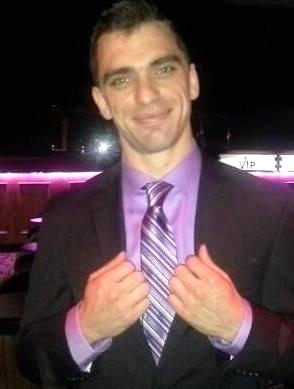
On a cool Saturday morning in mid-November, 29-year-old Black man Carlin Elrod was found lying on the ground near 10601 North Lamar Boulevard in North Austin, his body showing clear signs of trauma as officers responded to a call about a deceased person at 8:52 a.m. on November 15, 2025. He was pronounced dead at the scene at 9:08 a.m., and the stretch of North Lamar where he fell was quickly transformed from an ordinary corridor of the city into a tightly controlled crime scene, with police
vehicles, tape, and investigators converging on the area.
Homicide detectives and crime scene specialists began carefully documenting the scene and speaking with anyone who might have seen or heard something, trying to reconstruct the final moments before Elrod’s body was discovered. From those early efforts, a stark picture emerged: Elrod had been shot, and whoever pulled the trigger had already fled before officers arrived. There were no immediate answers about how long he had been there before the call came in, only the grim certainty that he had been targeted with lethal violence and left in the open along one of Austin’s major north–south arteries.
As word of the killing spread through local news outlets, the case was framed as part of a troubling pattern in the city. Authorities noted that Elrod’s death was being investigated as Austin’s 50th homicide of 2025 and the third such killing within the span of a week, underscoring how his death was not only a personal tragedy but also another marker in a year of mounting violence. Reports highlighted that officers had found him with “visible trauma” and that, even after initial interviews and forensic work at the site, investigators could say only that an unknown suspect had shot him and escaped into the surrounding neighborhood.
Days after the shooting, the narrative in the city remained one of unanswered questions and urgent appeals rather than closure. Police publicly emphasized that the investigation was still in its preliminary stages, and no arrest had been announced. The shooter was repeatedly described as being “still at large,” with no detailed description or name released to the public, a reminder that whoever was responsible had not yet been brought into custody. In response, the Austin Police Department renewed pleas for help, asking anyone with information to call their tip line or submit anonymous leads through the Capital Area Crime Stoppers program, and announced that a reward of up to $1,000 was available for information leading to an arrest.
Beyond the official statements and statistics, Elrod’s name began to appear in the digital memorials that track lives lost to gunfire across the United States. On the National Gun Violence Memorial website, he is listed simply as someone “lost to gun violence” on November 15, 2025, in Austin, Texas, one of more than 150,000 victims recorded there. On that page, visitors light virtual candles and are invited to share memories, fragments of personal history that might eventually fill in the portrait of the man whose death became the subject of police bulletins and crime reports. For now, the public record is dominated by the stark facts of his killing and the repeated reminder that the person who took his life has not yet been identified, leaving his case open and unresolved.
*