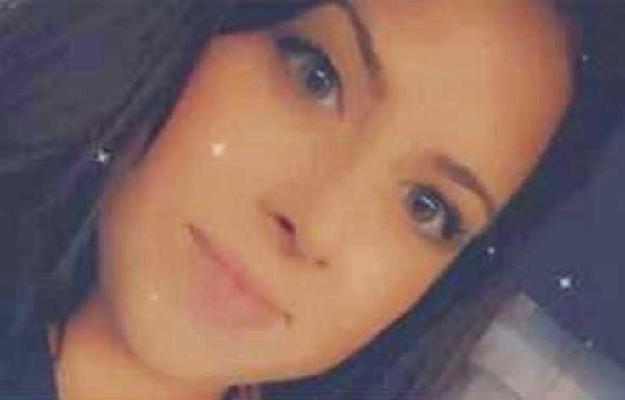
Anna Juarez was a 20-year-old woman whose life was poised on the edge of adulthood when violence found her in the early morning darkness of November 1, 2025, on a quiet residential block in Kansas City, Kansas. She lived in a neighborhood near North 11th Street and Barnett Avenue, and that Saturday began like any other until gunfire shattered the stillness before dawn. Officers with the Kansas City, Kansas, Police Department were dispatched a little after 4:20 a.m.
to the 700 block of North 11th Street after reports of shots fired. They arrived to find Anna outside her home, gravely wounded from a gunshot, and rushed her to a nearby hospital, where doctors could not save her. Her death, just days before what should have been her 21st birthday, left her family and community stunned and searching for answers.
In the hours and days that followed, the picture of what happened slowly came into focus. Police described the case as a homicide and said their Major Case Unit was investigating, while early reports noted that a person of interest was already in custody even as detectives pieced together the events leading up to the shooting. According to officials, officers were called at approximately 4:26–4:30 a.m., and when they reached the scene they found Anna lying outside her residence, suffering from a gunshot wound sustained in the very place that should have been safest for her. She was transported in critical condition and pronounced dead shortly after arrival at the hospital. The official notices were stark and spare, but they emphasized that this was not a random act: a targeted shooting that took her life just three days before her milestone birthday.
Behind those clinical descriptions was a young woman remembered by those who loved her as warm, artistic, and deeply generous. Her family told reporters that she had been at a party that night, surrounded by friends, before the gunfire erupted outside. One relative recalled that a friend stepped inside to use the bathroom, heard shots, and ran back out to find Anna hit and her car riddled with bullets. Loved ones described her as “a beautiful girl” who loved everybody and would “give anybody the shirt off her back,” a niece and sister figure whose laughter and energy filled family gatherings. In the days after her death, they gathered photos and memories, talked about how she liked to draw and design matching tattoos, and tried to make sense of a loss that came right before the holidays. A candlelit vigil was organized at Waterway Park in Kansas City, Kansas, so that friends, relatives, and neighbors could come together to mourn her, share stories, and stand in solidarity against the kind of violence that had taken her away.
Very quickly, the investigation moved from identifying a person of interest to announcing formal charges. Within a few days, prosecutors in Wyandotte County charged 22-year-old Kansas City, Kansas, resident Kevin Calamaco-Morales with first-degree murder in connection with Anna’s killing. Charging documents and local news reports say he is accused of firing a gun into an occupied dwelling in the 700 block of North 11th Street, with one of the bullets striking Anna as she stood outside the home. Alongside the first-degree murder count, he faces a charge of criminal discharge of a firearm into an occupied residence, underscoring investigators’ belief that the shots were deliberately fired toward people inside. He was taken into custody, held at the Wyandotte County Detention Center, and ordered jailed on a bond of $500,000. Court records and news coverage note that he has an immigration detainer as well, and that his next court appearance was scheduled for mid-November as the case moved into the early stages of the legal process.
For Anna’s family, the legal developments exist alongside a more personal story of a young woman caught in what they describe as an unhealthy, frightening relationship. Relatives told reporters that she had been trying to distance herself from the man now accused of killing her and wanted to come home but was scared to ask for help. They spoke openly about domestic violence, calling her death a painful reminder of how dangerous controlling or abusive relationships can become. On camera and in print, they used their grief to send a warning to others who might feel trapped: that there are people and places willing to help, and that it is crucial to get out before it is too late. Comments left on online memorial pages echoed that theme, with friends and community members describing her as a “sweetest soul” who “did not deserve this” and linking her death explicitly to domestic violence.
As the criminal case against Kevin Calamaco-Morales proceeds through the courts, Anna’s story continues to resonate far beyond the block where she fell. On gun violence memorial sites and local news pages, her name appears among other victims from Kansas City, Kansas, but family and friends insist on remembering her as more than a statistic: a young woman who worked, went to school in the area, and was loved by many. Candles and flowers appeared near her home, and community members were urged by police to share any information that might help solidify the case, with anonymous tips encouraged through local Crime Stoppers hotlines. Each update from investigators or prosecutors is matched by quiet acts of remembrance—a vigil in the park, an online fundraiser to help with funeral costs, a shared photo and message—small attempts to reclaim her narrative from the violence that ended her life. In the end, the story of Anna Juarez is one of promise cut short, a life remembered in snapshots and testimonies even as the search for full accountability continues in court.