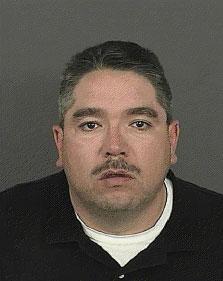
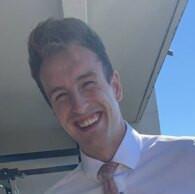
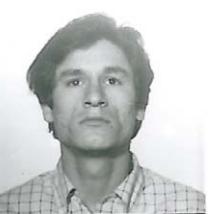
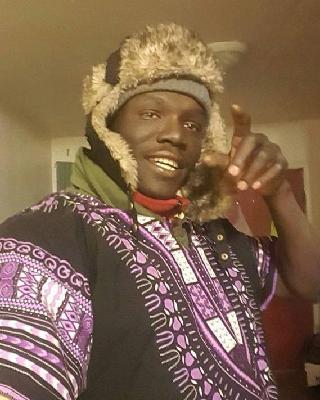
Jeffrey E. Sheffield was a 23-year-old white male living in Denver, Colorado, whose life was cut short on May 20, 1987, when he died by homicidal violence. Official records and memorials place his death in Denver and remember him simply as a young man whose life ended far too soon, with little public detail about his background beyond his age, gender, and the date and place of his death.
At the time of his death, Jeffrey shared his life and home with his roommate and close friend, 22-year-old Mitchell Gonzales. The two young men crossed paths with a drifter named Michael Tenneson, a man who had already left a trail of blood behind him. Earlier that year, Tenneson had fled Wisconsin after breaking into a home in La Crosse and murdering three people there, then moving on by bus and eventually gravitating to Denver. In the city, he managed to blend into the background, presenting himself not as a wanted killer but as a new acquaintance. Jeffrey and Mitchell befriended him after he reportedly stepped in to help them during a confrontation, and the three began spending time together, unaware that he was on the run for a triple homicide hundreds of miles away.
On a night in May, the tentative friendship came to a deadly end. Accounts describe the three men gathering for an evening of beer and cocaine, a casual get-together that would have seemed, from the outside, like nothing more than a small party among friends. As the night wound down and Jeffrey and Mitchell eventually went to sleep, Tenneson turned on them. Later testimony and investigative findings showed that he shot both men in the head at close range, using the same small-caliber handgun he had carried in Wisconsin. In court he would later claim that there had been some kind of struggle and that Jeffrey had tried to rob him, but prosecutors reconstructed the scene and persuaded the jury that both men were killed as they slept, transforming what Tenneson tried to frame as a desperate encounter into a cold, calculated execution inside their own home.
After killing the roommates, Tenneson treated their apartment as a place to be stripped rather than a crime scene that marked the end of two lives. Investigators later determined that he took their cash, pawned their stereo, and then focused on the most valuable thing he could drive away: Jeffrey s car. He left Denver in that stolen vehicle, attempting to disappear yet again. For a brief period, all that was publicly known was that two young men had been found shot to death and that their killer had vanished, taking their belongings and their primary means of transportation with him. That stolen car, however, would become a critical thread tying the murders to a much larger story.
Meanwhile, detectives in Wisconsin were still hunting the man responsible for the earlier triple homicide. Their investigation, along with the stolen vehicle report in Colorado, eventually converged on the same name. As the inquiries unfolded, Denver authorities discovered that the owner of the stolen car linked to an auto-theft arrest was in fact connected to the double homicide, and that the man in custody under an alias was actually Michael Tenneson. Communication with his family and careful checking of records helped confirm his identity. When confronted, he not only admitted to the Wisconsin killings but also acknowledged his role in the Denver murders, even describing how he had discarded the murder weapon after the two here in Denver. What began as an auto-theft case in Colorado and a fugitive hunt in Wisconsin merged into one narrative centered on a serial killer who had briefly passed through Jeffrey s life and destroyed it.
Justice for Jeffrey Sheffield unfolded in a Denver courtroom the following year. In 1988, Tenneson went on trial in Denver District Court, charged with two counts of first-degree murder after deliberation for the 1987 killings of Jeffrey and Mitchell, along with related charges for burglary and auto theft. At trial, his lawyers tried to soften the picture, arguing that he had acted in fear after a night of drinking and drug use, and that Jeffrey had attempted to rob him. Prosecutors countered with forensic evidence and the timeline of events, persuading jurors that both victims were shot as they slept, with no chance to defend themselves. The jury convicted him of the double murder and the associated felonies. During the penalty phase, the state sought the death penalty, emphasizing not only the Denver killings but also his confession to three prior murders in Wisconsin, while the defense presented evidence of possible fetal alcohol syndrome and a damaged personality as mitigating factors. In the end, eleven jurors favored death, but a single holdout refused to agree, and Colorado law required unanimity for execution. Tenneson was sentenced instead to two life terms plus additional decades for burglary and auto theft, and he later received three more life sentences in Wisconsin for the earlier triple homicide.
For Jeffrey s family and friends, the legal outcome could not restore the life that was taken, but it did ensure that the man who killed him would spend the rest of his days behind bars, with no realistic prospect of release. Public records note that Jeffrey was laid to rest in Coal Creek Cemetery in Louisville, Colorado, a quiet resting place that contrasts sharply with the violence that ended his life. The case now stands as a completed chapter in Denver s history of violent crime: a young man s murder solved and adjudicated, his killer identified, arrested, and convicted, even as the emotional weight of his loss continues to linger for those who remember him.