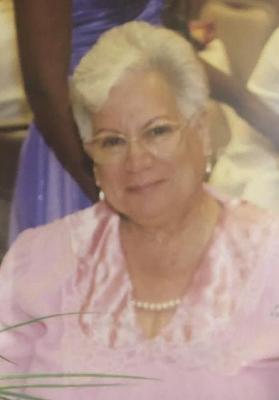
June Stott, 30, a White female from Rochester, New York, disappeared on October 23, 1989, and for a time it seemed like she might simply reappear the way some missing adults do—quietly, without headlines, without answers. Her boyfriend reported her missing, and the early concern was complicated by the fact that she was described as mentally ill and known to occasionally vanish without warning.
Because she did not fit the pattern detectives were beginning to fear—street-level sex work, drug use, the same narrow corridor of last-known sightings—her case initially sat apart from the city’s growing dread that a serial killer was at work.
A month later, on Thanksgiving Day, November 23, 1989, a man walking his dog along the Genesee River gorge came upon her body. The discovery jolted investigators, not just because another victim had surfaced near the river, but because Stott’s death didn’t seem to belong to the same narrative they’d been building. The autopsy concluded she had been strangled, and it documented extensive post-mortem mutilation that investigators would later view as a grim escalation—an act that suggested the killer’s comfort with returning to, or lingering with, the dead. The scene and the injuries pushed the investigation into confusion and urgency: if Stott wasn’t part of the same series, did Rochester have more than one predator stalking it?
By then, Rochester was already counting other women who had vanished and been found murdered, many connected to the Lyell Avenue area. Rumors on the street had begun to congeal into a name—“Mike” or “Mitch”—a client some women said frightened them, a man described as violent, whose fantasies centered on control and strangulation. Tips like that gave detectives something human-shaped to chase, but not yet a real identity. With the interval between disappearances shrinking and fear rising, investigators sought help from the FBI, which produced a profile pointing to a local man with a criminal past who knew the terrain and derived gratification after death rather than before it.
The break came in the cold, hunted days after the New Year. During an aerial search near Salmon Creek, police spotted a body on the ground—and a man on a bridge above it who abruptly fled. Investigators tracked him down and identified him as Arthur John Shawcross. He was taken in for questioning, and while he initially denied involvement in the Rochester murders, he was photographed and released when police believed they lacked enough to hold him. That decision didn’t last long. Women who had survived encounters with “Mike/Mitch” recognized Shawcross as the same man, a regular customer whose face finally gave the investigation a center.
Shawcross was arrested on January 5, 1990, after police surveillance and witness observations placed him in suspicious circumstances near the dumping area by the bridge. As investigators pressed him about specific victims, the questioning turned toward Stott—who, unlike many of the others, was described as someone Shawcross knew socially. Accounts of the interrogation and case summaries describe him offering an explanation for the particular mutilation inflicted on her, framing it as something he did for her rather than to her, a chilling distortion that underscored how personal her murder may have been in his mind.
The case did not end with the arrest. Shawcross went to trial and was found sane and guilty of multiple counts of second-degree murder, receiving a sentence structure that amounted to 250 years in prison, ensuring he would never realistically walk free. In a separate proceeding, he later pleaded guilty to an additional murder charge tied to another victim found outside Monroe County, with that sentence running alongside the rest. In the aftermath, June Stott’s death became fixed in the chronology of what Rochester came to know as the Genesee River Killer’s spree—an outlier at first glance, then a pivotal turning point that widened the scope of terror, redirected the investigation, and helped confirm that the city was facing one relentless offender, not several.