The winter of 1976 in New York City was a time of unease, and for one family, it would bring a horror that would never fade. On December 29th, a group of children playing on a path in the urban oasis of Central Park stumbled upon a gruesome discovery. Their innocent games were cut short by the sight of green garbage bags, from which a human tragedy would soon be revealed. Inside were the dismembered remains of a teenage boy, a shocking act of violence that stood out even in a city grappling with high crime rates. The victim was soon identified as Harry Carillo, a 16-year-old male who had become the final victim of a man's dark compulsions.
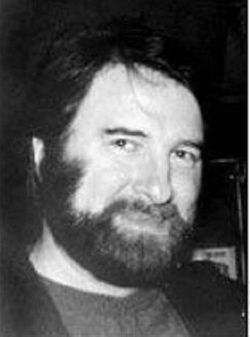
Harry had been known to his killer, a quiet and lonely man named Waldo Grant, for about six months. Grant, a self-ordained minister who had moved to New York from Georgia, lived on the Upper West Side and was known within the local gay community. What his neighbors did not know was that behind his unassuming facade was a serial killer with what he would later describe as an "uncontrollable urge to kill." In the days leading up to the discovery in Central Park, Grant had murdered the young man who he would later confess to desiring greatly.
The investigation into the horrific discovery in Central Park quickly led detectives to Waldo Grant. He had been the last person seen with Harry Carillo, a fact that made him a primary suspect. Over a period of two weeks, investigators questioned Grant multiple times, slowly building their case with circumstantial evidence. The breakthrough came on January 10, 1977, when Grant was brought in for another round of questioning. After five hours of interrogation, he confessed to the murder of Harry Carillo. His chilling words to the police revealed a motive rooted in a twisted desire, stating, "Harry is very attractive to me and I desire him very much and that was the only way I could get him."
With the confession to Harry's murder, the full scope of Grant's murderous activities began to unravel. He went on to admit to three other killings that had remained unsolved, a string of violent acts that had begun years earlier. His confession detailed the gruesome aftermath of Harry's death; he had used a saw to dismember the boy's naked body into three pieces, placed the remains into the garbage bags, and then used a shopping cart to transport them to Central Park, where he left them to be found.
Waldo Grant was charged with four counts of murder. On June 30, 1978, he was found guilty and sentenced to four concurrent life sentences in prison. His conviction brought a close to the investigation into the death of Harry Carillo and the other young men he had murdered, though it could do little to erase the pain and horror he had inflicted. The case of the dismembered boy in Central Park became another grim statistic in a city that was struggling with violence, but for those who knew and loved Harry, it was a personal and enduring tragedy.
The story of Harry Carillo is one of a young life cut brutally short, a victim of a serial killer who lurked in the city's shadows. The discovery of his body was a shocking event that highlighted the vulnerability of the city's youth and the hidden dangers that could be found even in its most iconic public spaces. Waldo Grant remained in prison for the rest of his life, and he died in an Albany hospital on June 6, 2023, at the age of 76. The case is considered closed, but the memory of the young man who met such a horrific end in the winter of 1976 remains a somber chapter in New York City's history.