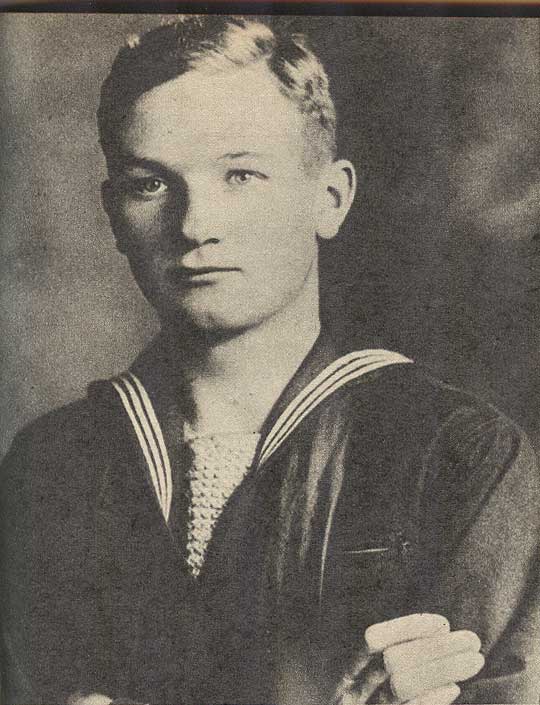
At the turn of the 20th century, the grimy streets of New York City’s Lower East Side were a battleground for ruthless street gangs, and Richard “Richie” Fitzpatrick was a formidable player in that violent world. An Irish-American gangster, Fitzpatrick was known for his cunning and his prowess as a gunman. He began his criminal career in the late 1890s with the notorious Five Points Gang, led by Paul Kelly. However, during the brutal gang war that erupted between the Five Points Gang and their rivals, the Eastman Gang, Fitzpatrick saw an opportunity. In 1903, he and another ambitious gangster, Max "Kid Twist" Zwerbach, defected and joined forces with Monk Eastman, quickly rising to become trusted, high-ranking lieutenants in the organization.
The balance of power in the underworld shifted dramatically in 1904 when Monk Eastman, the charismatic leader of his sprawling gang, was arrested for a street mugging and sent to prison.
His absence created a dangerous power vacuum, and his two top gunmen, Fitzpatrick and Zwerbach, immediately began to vie for control. The Eastman Gang fractured into two rival factions, each led by one of the ambitious lieutenants. The infighting threatened to destroy the gang from within, even as their war with the Five Points Gang continued to simmer. The escalating internal conflict became so destructive that the two sides were compelled to negotiate.
On November 1, 1904, Richard Fitzpatrick, then 33 years old, walked into a saloon on Sheriff Street in Manhattan for what was supposed to be a peace conference. The meeting with Zwerbach’s faction was intended to broker a truce and potentially reunite the splintered gang. But before any negotiations could begin, the tense atmosphere inside the saloon was shattered by the sound of a gunshot. Richard Fitzpatrick fell to the floor, shot to death. The peace talks ended in a bloody execution, a decisive move in the struggle for gangland supremacy.
Suspicion for the murder immediately fell on an associate of Max Zwerbach named Harris Dahl, who was also known as "Kid Dahl." Despite the strong belief that Dahl was the triggerman who had acted on Zwerbach's behalf, no one was ever arrested or convicted for the crime. The killing was a clear message, and it effectively crippled Fitzpatrick's faction. Any remaining loyalty to the fallen leader was brutally extinguished just a few weeks later when Zwerbach's top lieutenant, Vach "Cyclone Louie" Lewis, led an attack that wiped out the rest of Fitzpatrick's key supporters. With his rival eliminated, Max "Kid Twist" Zwerbach assumed undisputed leadership of the Eastman Gang.
Fitzpatrick’s legacy, beyond his violent demise, includes a tactical innovation that would later be immortalized in popular culture. He was known for a particular method of ambush where he would arrange a meeting in a restaurant, allow himself to be searched for weapons, and then excuse himself to use the restroom. There, he would retrieve a gun he had stashed earlier, return to the table, and kill his unsuspecting opponent. This exact tactic was famously depicted in the film *The Godfather*, used by the character Michael Corleone to eliminate his enemies.
The murder of Richie Fitzpatrick was a pivotal moment in the history of New York's street gangs, consolidating power for Max Zwerbach and marking a new, violent chapter in the Eastman Gang's reign. However, the law never officially solved the crime. Over a century later, the case remains open, a cold footnote in the annals of New York City crime. Fitzpatrick's death is categorized among the city's unsolved homicides, a stark reminder of a time when gangland justice was often the only justice carried out. No reward has ever been offered, and no formal tip lines exist for a crime this old, leaving the final word on the matter to the historical accounts of gang warfare on the Lower East Side.