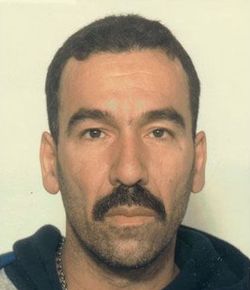
Guillermo Graniela was a 30-year-old man described as Hispanic/Latino who was found dead on August 29, 1981, in New York City, in the basement of a Bronx building at 417 Bronx Park Avenue. The scene was brutally deliberate: his hands and feet were bound with rope, and another rope was fixed around his neck. Investigators would later describe a crude, vicious tightening device—an ordinary screwdriver jammed into the knot—used as a lever to twist the rope down until breathing stopped.
In the Bronx heat of late summer, the killing looked less like a sudden fight and more like a controlled act of domination. The bindings suggested restraint first, terror second, and death last. Whoever did it had time at the scene—time to tie, to position, to cinch the knot, and to apply the screwdriver’s turning force, a method designed to keep tightening with every twist. Graniela’s body, hidden below street level, carried the message of a murderer who expected darkness and abandonment to swallow the evidence.
As detectives worked the case, they began to see it as part of a pattern tied to Jesús Aguilera, a Cuban-born man who had arrived in the United States in 1981 during the Mariel exodus. Accounts of Aguilera’s crimes described him using restraints and improvised tools to tighten ligatures, and luring victims with promises—most notoriously, cut-rate designer jeans—before controlling them with rope, belts, or wire. Shortly before Graniela was found, a woman reported surviving an attack in which she was bound and left with a belt arranged so that struggling would make it constrict more tightly; that incident led to Aguilera’s conviction for first-degree robbery.
The break that locked the Bronx homicide to a named suspect came months later. On February 16, 1982, Aguilera was arrested and held in a Bronx stationhouse, and interrogations over roughly the next twenty hours produced written and videotaped statements, aided by Spanish-language interpretation. Authorities pursued separate prosecutions in the Bronx and Manhattan for different killings, building their case around those admissions and the emerging links between the murders’ distinctive restraint-and-strangulation methods.
In the Bronx case, Aguilera was tried in Supreme Court, Bronx County and convicted later in 1982 for the Bronx murder, a second-degree murder conviction connected to Graniela’s death. The legal battles that followed focused heavily on the circumstances under which Aguilera’s statements were obtained and used at trial, but the Bronx conviction stood, and Aguilera remained imprisoned for the 1981 killings.
Years later, Aguilera’s name continued to surface in connection with other violent crimes from that same period. Advances in forensic science eventually helped prosecutors pursue an additional decades-old murder charge against him, adding more prison time to the sentences he was already serving, and authorities and reporters have noted that investigators considered him a suspect in at least one other killing beyond the cases that put him away.