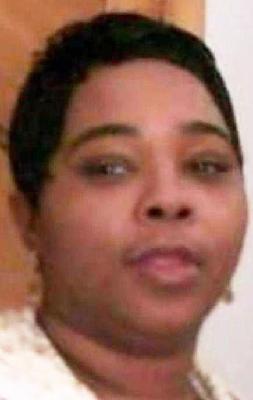
Sheryl Johnson, a 44-year-old Black / African American woman, was killed in Chicago during the third week of April 1999. Court records place her homicide in April 1999 rather than August 1990. Her body was discovered around midnight on April 20, 1999, inside a boarded-up, abandoned four-flat at 5004 South Justine Street on the South Side. Chicago police officer Daniel Kienzle had entered the building while conducting narcotics surveillance and was checking the structure when his flashlight revealed Johnson lying on the floor of an upstairs room. One of her legs was positioned against a wall, she was partially undressed, and blood was visible around her nose and mouth.
The Cook County medical examiner documented significant internal injuries to Johnson's neck, including hemorrhaging in the neck muscles and upper esophagus and pinpoint hemorrhaging involving her airway and eyelids. There was also an injury to her tongue and bruising and abrasions on several areas of her body. Although a faint bruise was present on the side of her neck, investigators found no evidence that a cord or other ligature had been used. The medical examiner concluded that Johnson had been killed by manual strangulation, meaning that pressure had been applied directly to her neck by her attacker's hands.
Evidence recovered during the autopsy became crucial to identifying her killer. Oral, vaginal and rectal swabs were collected and submitted for forensic testing. A forensic scientist with the Illinois State Police testified that DNA recovered from Johnson's vaginal swab matched the DNA profile of Andre Crawford and that the semen recovered from her was consistent with having originated from him. Johnson's case became one of a number of killings in Chicago's Englewood and New City areas in which investigators discovered forensic evidence pointing toward the same offender.
Crawford eventually provided investigators with a detailed recorded confession describing his encounter with Johnson. According to his statement, he met her near West 50th Street and South Marshfield Avenue during an afternoon in the third week of April 1999. He said they knew each other and had previously exchanged drugs for sex. On this occasion, the two walked east to an abandoned building near South Justine Street, entered through a side door and went upstairs to a rear bedroom. Crawford said he gave Johnson some cocaine and that, when she stopped their sexual activity and demanded additional cocaine before continuing, he became angry. He admitted leaning over her and strangling her as she resisted for roughly a minute before she stopped moving.
Crawford confessed that after killing Johnson he sexually assaulted her body. He said he took her shoes, pants and purse and left the abandoned building, discarded the property and used cocaine. He later returned to the building and again sexually assaulted her body. Before leaving for work, Crawford said he dragged Johnson into another bedroom and left her with her torso on the floor and her feet against the wall. That description closely corresponded with the position in which police later found her.
Johnson's killing occurred near the end of a prolonged series of attacks against women on Chicago's South Side. Investigators had begun recognizing similarities among the crimes, including abandoned buildings being used as crime scenes and DNA evidence connecting several victims to one unidentified man. A joint Chicago Police Department and FBI task force investigated the pattern. Detectives interviewed people familiar with the victims and received tips about a local man known as "Dre," later identified as Andre Crawford. Investigators also compared periods when Crawford had been incarcerated with the chronology of the killings and found that the attacks stopped while he was jailed and resumed after he was released.
Police apprehended Crawford on January 28, 2000. He was initially brought in after investigators received tips about him, and authorities obtained his DNA. The genetic evidence connected him to multiple homicide and sexual-assault investigations. A surviving victim of another attack also identified him. Crawford then spent several days giving recorded statements in which he confessed not only to murders police had already connected through DNA but also to additional killings that investigators had not initially considered part of the same series.
When authorities publicly announced the case at the end of January 2000, Crawford was initially charged with ten counts of first-degree murder, eleven counts of aggravated criminal sexual assault and one count of attempted murder. The investigation and prosecution ultimately encompassed eleven murder victims. Johnson's prosecution was assigned Cook County case number 00 CR 5454, and Crawford was eventually tried in a consolidated proceeding involving the murders, sexual assaults and the attempted murder of a woman who had survived one of his attacks.
Before the case went to the jury, prosecutors maintained three first-degree murder counts and four aggravated criminal sexual assault counts connected specifically to Johnson. During the trial, jurors heard the forensic evidence, testimony concerning the discovery and autopsy of her body, and Crawford's recorded confession describing how he strangled her, sexually assaulted her after death, removed her belongings and returned to the crime scene. Johnson's DNA evidence was among the forensic links prosecutors used to demonstrate the connection between Crawford and the South Side killings.
On December 10, 2009, the jury found Crawford guilty in the murders of eleven victims as well as multiple aggravated criminal sexual assaults and the attempted murder of the surviving victim. In Johnson's case, the multiple verdicts were ultimately merged by the court into one first-degree murder conviction and two aggravated criminal sexual assault convictions. Across the consolidated cases, Crawford was convicted of murdering all eleven women prosecutors alleged he had killed.
The jury determined that Crawford was legally eligible for the death penalty, but during the penalty phase the jurors declined to sentence him to death. The court therefore imposed natural life imprisonment for the murders, along with 30-year prison terms for the aggravated criminal sexual assault convictions and a 30-year term arising from the attempted murder of the surviving victim. His convictions later went before the Illinois Appellate Court, which affirmed the judgment in 2013.
Johnson's homicide was therefore not left unresolved. The physical evidence recovered from her body, Crawford's own detailed account of the killing and the larger investigation into the linked South Side murders resulted in his conviction. He remained incarcerated at Menard Correctional Center and never regained his freedom. Crawford died in prison in March 2017 from liver cancer, leaving the convictions for Johnson's murder and the other killings intact.