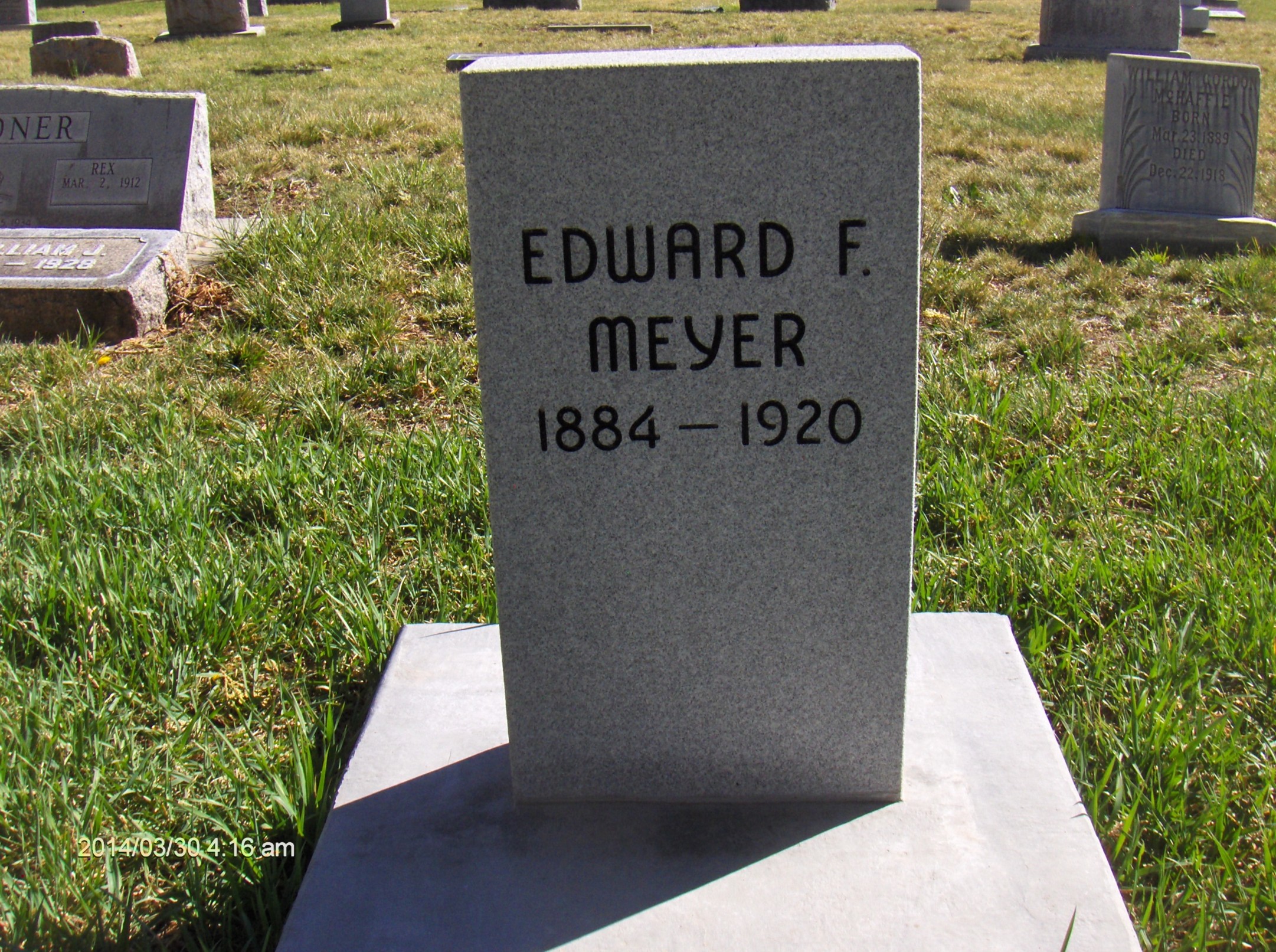
In August of 1920, Edward Meyer, a 35-year-old White male and ranch foreman from Twin Falls, Idaho, married a woman named Anna May McHaffie in Pocatello. Little did he know, this union would lead to his untimely death just over a month later. Shortly after their wedding, Meyer fell mysteriously ill and passed away on September 7, 1920. An initial autopsy pointed to typhoid fever as the cause of death.
His new wife, whose real name was Lyda Southard, had a dark and extensive history of
marrying men who would soon after meet their demise. Edward Meyer was, in fact, her fourth husband to die under suspicious circumstances. Lyda's hasty departure from Twin Falls after Meyer's funeral, without attempting to collect on his substantial $12,000 life insurance policy, raised the suspicions of local law enforcement. Adding to the intrigue, a ranch hand who had fallen ill at the same time as Meyer had recovered, suggesting something more sinister than a simple illness was at play.
This series of events triggered a deeper investigation led by Deputy Virgil Ormsby. His inquiries delved into the deaths of Lyda's previous husbands. A significant breakthrough came when it was discovered that Lyda had purchased large quantities of flypaper, which at the time contained arsenic. The theory was that she would boil the flypaper to extract the arsenic, which she then used to poison her unsuspecting husbands. In the spring of 1921, Meyer's body was exhumed, and a subsequent examination revealed lethal amounts of arsenic, confirming he had been poisoned. The remains of her other deceased husbands were also exhumed and found to contain arsenic as well.
By this time, Lyda had already married her fifth husband, a Navy Chief Petty Officer named Paul Southard, and was living in Honolulu under the name Eva Edith Meyer. She was arrested in Honolulu in May 1921 and returned to Twin Falls to stand trial for the murder of Edward Meyer. During the trial, which garnered national attention, Idaho State Chemist E.F. Rhodenbaugh testified that he found a significant amount of poison in Meyer's body. Despite pleading not guilty, Lyda Southard was convicted of second-degree murder and sentenced to ten years to life in the Idaho State Penitentiary.