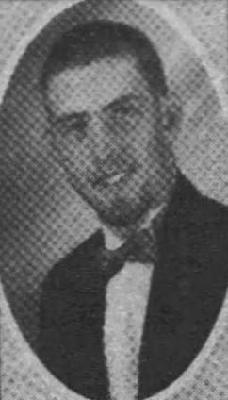
In the spring of 1998, just days before his high school graduation, 18-year-old Robert Nicholas 'Nick' Creson, a football player at Lincoln County High School in Fayetteville, Tennessee, was fatally shot in the school parking lot. The incident, which occurred on May 19, 1998, stemmed from a dispute over a girl. His classmate, Jacob Lee Davis, also 18, was identified as the shooter.
The conflict between the two teenagers centered around Tonya Bishop, who had previously been in a long-term relationship with Creson before she began dating Davis. Despite the breakup, Creson and Bishop continued to have a close relationship, which reportedly included intimate encounters. Davis became distraught after learning that Creson and Bishop had been together. On the day of the shooting, Davis and Creson had an argument at school. Following the confrontation, Davis went home and retrieved a. 22-caliber rifle. He then returned to the school parking lot and waited for Creson.
Shortly after 2 p.m., as Creson was walking in the parking lot, Davis got out of his car with the rifle. From a distance of 15 to 20 feet, he fired at Creson. An eyewitness reported that after the first shot, Creson fell to his knees and pleaded with Davis to stop. Davis fired again, hitting Creson in the chest and causing him to fall backward, and then fired a third shot into him as he lay on the ground. Creson was transported to a local hospital where he died a short time later from three gunshot wounds to his chest and abdomen. After the shooting, Davis placed the gun on the ground, sat down, and waited for the police to arrive. He was arrested at the scene without incident. Investigators found a letter in Davis's car in which he asked for forgiveness for what he was about to do.
Jacob Lee Davis, an honor student with no prior criminal record, was charged with first-degree murder, reckless endangerment, and illegal weapons possession on school property. During his trial, his defense attorneys argued that he was severely depressed and had diminished capacity, and they sought a conviction on a lesser charge. However, the prosecution used letters written by Davis to argue that the murder was premeditated. In July 1999, a jury convicted Davis of first-degree murder. He was sentenced to life in prison with the possibility of parole after 51 years. He also received a one-year sentence for the other charges, to be served concurrently.