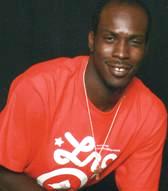
Brandon Lamont Gardner, a 27-year-old Black man from Springfield, Tennessee, was known as a devoted father of five long before the gunfire that ultimately claimed his life on November 10, 2014. Neighbors and local reporters would later describe his final year as one marked by both extraordinary survival and devastating loss, as if violence kept circling the same streets where he lived, worked, and raised his children.
Earlier that year, in the early hours of May 11, Gardner had already come face to face with death. Shortly after 2 a.m., he was caught up in a rolling confrontation that began outside El Alteno Mexican Restaurant on Tom Austin Highway, where witnesses recalled hearing shots and police later recovered multiple shell casings in the parking lot. The violence moved across town, first toward Blair Street and then to the area of 15th Avenue and South Main, where Gardner’s red Impala was riddled with bullets and he was struck multiple times in the chest, arms, legs, and groin. Despite those wounds, he managed to drive himself to NorthCrest Medical Center, where hospital staff stabilized him before he was airlifted to Vanderbilt University Medical Center in Nashville in critical but stable condition.
In the days that followed, Springfield police announced that one of the two people of interest in that May shooting, 39-year-old Alan Jermaine Gardner, had turned himself in. Investigators emphasized that, despite sharing a last name, suspect and victim were not related. Alan Gardner was charged with criminal attempt to commit first-degree murder and unlawful possession of a weapon, while detectives continued to search for a second suspect and tried to piece together a motive. Even as he recovered in a Nashville hospital, the investigation into who had tried to kill him and why remained unfinished, and the sense that trouble still hovered around him never fully left the community’s conversations.
On the evening of November 10, 2014, violence returned to the same city streets with even deadlier force. Around 8 p.m., residents near the intersection of East 18th Avenue and South Main Street heard a burst of gunfire and called police. Witnesses later told investigators that an unknown vehicle had driven past and opened fire, spraying the area in what authorities immediately described as a drive-by shooting. When officers arrived, they found Gardner lying on the ground while a citizen knelt beside him, performing CPR under the flashing blue lights. He was rushed by ambulance back to NorthCrest Medical Center, but despite efforts to revive him, he was pronounced dead shortly after arrival.
The drive-by left another person wounded as well. Almost simultaneously with the calls from South Main, officers were dispatched to NorthCrest because a second gunshot victim had arrived in a private vehicle. That man, 21-year-old Mandrekus Young of Springfield, had been shot in the leg; he was later flown to Vanderbilt in Nashville with injuries that doctors classified as serious but not life-threatening. Back at the scene, police cordoned off the intersection, collected shell casings from the roadway, and examined nearby houses and vehicles for bullet strikes, trying to reconstruct how many shots had been fired and from where the shooter had aimed. The taped-off blocks and the swirl of patrol cars lingered into the night, a stark contrast to the ordinary weeknight that had existed there only an hour before.
In the weeks that followed, Springfield Detective Rickie Morris led the homicide investigation, canvassing witnesses and sifting through physical evidence from the scene. Through a combination of interviews and forensic work, Morris and his colleagues eventually focused on two young men from Springfield: 19-year-old Wyatt Cragin and 20-year-old Travis Wilkerson. The case was presented to a Robertson County grand jury, which returned indictments charging both men with first-degree murder in Gardner’s death, attempted first-degree murder in the shooting of Mandrekus Young, and aggravated assault. Authorities later announced that Cragin had been taken into custody during a vehicle stop on March 5, 2015, while Wilkerson was already being held at the Robertson County Detention Center on a probation violation and other charges. Bond for each was set at $200,000, and officials stressed that the men were presumed innocent unless proven guilty in court.
Public records after those indictments show both Cragin and Wilkerson continuing to surface in the criminal justice system in subsequent years, with arrests on other serious charges in Tennessee, suggesting ongoing legal trouble for the men once linked to Gardner’s killing. Yet none of the readily accessible court or news records clearly spell out how the murder case itself was ultimately resolved—whether it ended in convictions, plea agreements, or some other outcome—leaving a gap in the documented story of what happened after the grand jury acted.
For Gardner’s family and the Springfield community, that gap sits alongside the stark facts that are known: a young father who had already survived one barrage of bullets in May was gunned down in a drive-by shooting just six months later; another man was wounded; and two suspects were publicly named and indicted but left, at least in the available record, in a kind of unresolved legal limbo. His obituary and memorial pages now capture only fragments of the life behind those headlines—his age, his hometown, the dates of his birth and death—while the streets where he fell, and the children he left behind, carry the quieter, ongoing weight of a story that still feels unfinished.