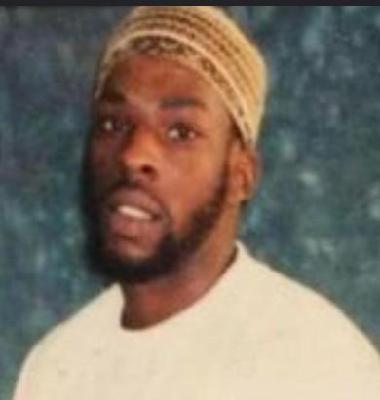
Jamar Beauford, age 21, Male, was killed in Chester, Pennsylvania, in a shooting connected to a confrontation outside a bar. Online records differ slightly on the date: a gun-violence memorial lists his death as February 3, 1995, while a later federal court order reviewing the criminal case states that Derrick Gay shot and killed Beauford outside a Chester bar on February 4, 1995.
The court record describes the case as one that turned heavily on eyewitness testimony.
Gregory Barksdale, identified in the federal proceedings as an eyewitness, said he had been outside the bar around the time of the shooting. He admitted that he had been drinking before going to the bar and that he smoked marijuana outside the bar immediately before and during the gunfire. At trial, Barksdale testified that he heard three or four shots and saw Derrick Gay fire one shot into the air, one toward the ground, and one at Beauford as Beauford was running away.
Medical testimony later described the violence done to Beauford's body. The Commonwealth's medical expert testified that Beauford suffered three gunshot wounds: one to the top of his foot, one to his right buttock, and one to the right side of his chest. The shot to the chest was identified as the fatal wound, though the medical expert could not determine which bullet struck first and testified that the chest wound may not have immediately incapacitated Beauford, meaning he could have continued running after being hit.
Derrick Gay became the central suspect and was prosecuted in Delaware County Court of Common Pleas. He was convicted after a bench trial before Judge Charles C. Keeler. The convictions included third-degree murder, aggravated assault, recklessly endangering another person, possessing an instrument of crime, and possession of a prohibited offensive weapon.
Years later, Gay challenged the conviction in federal court through a habeas petition. He argued that the prosecution relied on false or unreliable testimony, focusing especially on Barksdale's alcohol use, marijuana use, and the differences between Barksdale's description of the shooting and the medical evidence. The federal court rejected those arguments, finding that the trial judge had been aware of Barksdale's substance use and that any inconsistencies did not prove perjury or undermine the conviction. The court also noted that Barksdale himself suggested the passage of time may have affected his memory.
Gay also argued that the evidence was legally insufficient, that Barksdale should not have been allowed to testify, and that his trial counsel was ineffective for not challenging Barksdale more aggressively or calling a toxicology expert. The federal court found that the evidence was sufficient for a rational factfinder to convict Gay beyond a reasonable doubt and denied relief. As a result, the conviction for Beauford's killing remained in place.