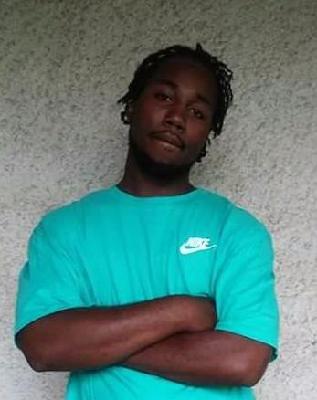
Paul D. Falling Jr., a 19-year-old male, was killed in Minneapolis on December 8, 2015, in a shooting that left behind the outline of a life that seemed to be only beginning to find its footing. He was found early that Tuesday at a street corner in north Minneapolis, and authorities later said he died from gunshot wounds to the head and neck. The Hennepin County medical examiner ruled the death a homicide.
News reports at the time said he had no permanent address, and people who knew him described him as a young man trying to steady himself, someone not long removed from school and still searching for a place to belong. 
In the accounts that surfaced after his death, Paul appears less as a statistic than as a vulnerable young man moving through a hard stretch of life. He had been staying at a youth shelter near his job and had recently started working as a dishwasher at the Finnish Bistro in St. Paul. His employer, Sandra Weise, described him as innocent and unprepared for street life, saying he had followed a parent to the city and lacked the resources to care for himself. Those details gave his death an especially tragic shape: a teenager trying to establish routine and dignity, then suddenly cut down at a bus stop on the north side of Minneapolis before that fragile stability had a chance to hold. 
Publicly available reporting on the case is sparse, and that silence has become part of the story. The initial coverage identified Paul and confirmed the homicide ruling, but the available online sources do not show a publicly named suspect, an announced arrest, or any published criminal charges tied to his killing. Later listings in cold-case and unsolved-case resources continue to place his death among unresolved Minneapolis homicides, suggesting that, at least in the public record now available online, the case did not advance to the point of a publicly documented prosecution or conviction. 
What remains is the contrast between the ordinary pieces of Paul Falling’s life and the violence of the way it ended. His obituary notes the schools he attended and fixes him in time as a young man born in September 1996, dead by early December 2015. The reporting that followed filled in just enough to make the loss feel close: a teenager, homeless, working, trying, waiting at or near a bus stop in the dark of a Minnesota morning, and then gone. More than a decade later, the online record still reads less like a finished case file than like an unfinished sentence, with no publicly documented arrest or conviction to close it.