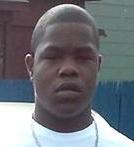
Isiah Xavier Wiley, an 18-year-old Black / African American male from Erie, Pennsylvania, died on the night of June 6, 2016, only days after his eighteenth birthday. He had been born in Erie on May 31, 1998, and was remembered by family as a young man who attended Strong Vincent High School, loved cars, rap music, fashion, smiling, and spending time with his nieces and nephews.
The shooting unfolded at about 9:31 p.m. on Lincoln Avenue near the Bayfront Parkway in Erie. Police responded to a report of shots fired and found Wiley dead in the driver’s seat of a white 2003 Cadillac. A passenger, Luis Lopez, survived. According to court records, Lopez told police that another vehicle pulled up, someone fired several shots into the Cadillac, and the vehicle fled. Other witnesses described the shooter’s vehicle as dark-colored. Investigators recovered three 9-millimeter shell casings and a bullet at the scene, and the coroner ruled Wiley’s death a homicide.
The investigation later shifted toward a Taurus PT111 9-millimeter semiautomatic handgun that police found during a separate incident on June 12, 2016. Ballistics testing by the Pennsylvania State Police Crime Laboratory identified that gun as the weapon that fired the casings and bullet recovered from the Lincoln Avenue shooting scene. Investigators also lifted a latent fingerprint from the handgun, and state police identified it as the left thumbprint of Jay-C O’Bryan McGlumphy.
More than a year after Wiley was killed, police interviewed McGlumphy on August 1, 2017. According to the later court opinion, McGlumphy told investigators that on the night of the shooting he was picked up by three other people in a dark-colored SUV. He said the group found the white Cadillac with Luis Lopez inside, followed it, lost it, then located it again near the 1000 block of Lincoln Avenue close to the Bayfront Parkway. McGlumphy said the others in the SUV handed him a loaded gun and directed him to fire at the Cadillac. He said he fired six or seven shots, then noticed Wiley slumped over in the driver’s seat. McGlumphy was 17 years old at the time of the killing.
Authorities maintained that Wiley was not the intended target. The prosecution’s position was that Lopez, the passenger who survived, was the person the shooters were after, but Wiley was the one struck and killed. On October 27, 2017, McGlumphy was charged in connection with the shooting. The charges included criminal homicide, first-degree murder, conspiracy to commit first-degree murder, attempted first-degree murder, aggravated assault, recklessly endangering another person, possession of an instrument of crime, possession of a firearm by a minor, and carrying a firearm without a license.
Before the case was resolved, McGlumphy’s defense sought to move the matter into juvenile court because he had been 17 at the time of the shooting. A psychological evaluation reviewed his juvenile history and concluded that he was not amenable to treatment within the juvenile system. After a hearing, the court denied the request to decertify the case to juvenile court, meaning McGlumphy remained charged as an adult.
On October 19, 2018, McGlumphy entered a guilty plea. He pleaded guilty to third-degree murder, possession of an instrument of crime, and possession of a firearm by a minor. At sentencing, the court addressed a letter in which McGlumphy claimed he was innocent and was taking the blame for someone else. The judge rejected any attempt to withdraw the plea, noting that McGlumphy had already admitted in open court that he fired the bullets that caused Wiley’s death.
On December 12, 2018, McGlumphy was sentenced to an aggregate term of 25 to 50 years in prison, along with restitution and costs. He later pursued post-conviction relief, arguing issues involving counsel, his plea, and appeal rights, but the Erie County Court of Common Pleas dismissed his PCRA petition. In 2022, the Pennsylvania Superior Court affirmed that dismissal, leaving the conviction and sentence in place.