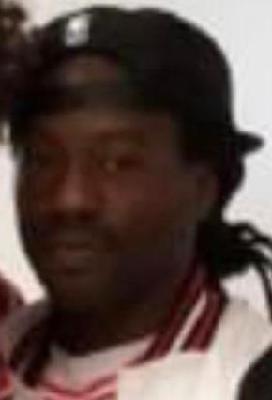
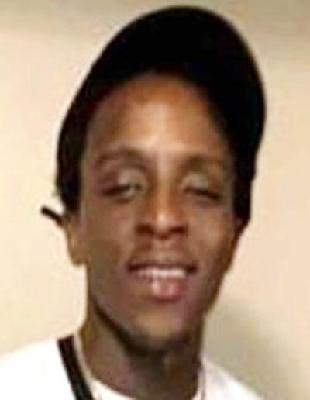
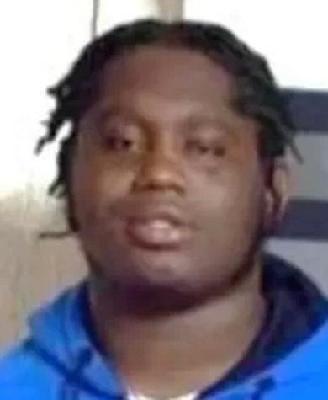
Justin Allen Wiley, a 22-year-old Black male, was killed in Erie, Pennsylvania, in the early minutes of July 2, 2015, after a confrontation that prosecutors later portrayed as the violent end of an ongoing dispute. Police were called at about 12:20 a.m. to the area of West 19th and Chestnut Streets, where they found Wiley unresponsive in the driver’s seat of a silver Pontiac Grand Am that had come to rest in the yard of a house near the northwest corner of the intersection. He had been shot in the back of the head. Investigators found damage around his car that showed more than one shot had been fired: the driver’s-side window was shattered, bullet holes marked the rear driver’s-side door, and another bullet hole was found in the wood siding of the nearby house.
The autopsy determined that Wiley died from a single gunshot wound to the back of the head. The bullet removed from his head was described in court records as a nine-millimeter/.38-caliber class bullet, while other ballistics evidence recovered at the scene was. 45-caliber. That led investigators to conclude that at least two guns were used during the attack. No gun matching those calibers was recovered at the scene. Across the street from Wiley’s vehicle, police found a silver Subaru Tribeca with its windows down and its hood and radiator area still hot, suggesting it had recently been running. That vehicle became one of the key pieces of evidence tying the case to Dawuan Dupree Carson.
Investigators learned that Carson and Wiley had a history before the shooting. Court records described an ongoing dispute connected to an incident in which Wiley had allegedly thrown a bottle at Carson’s Jaguar outside a local bar not long before the homicide. The tension had reportedly escalated further on May 31, 2015, when Wiley told police that Carson had fired shots at him around 2:00 a.m. near another local bar. That investigation was closed after Wiley did not respond to detectives’ attempts to follow up with him.
The night before Wiley was killed, Ashley Anderson loaned the Subaru Tribeca to Carson in exchange for heroin, according to trial testimony. Anderson and Tanya Bennett both testified that Carson was their heroin dealer, and Bennett confirmed that Carson had possession of the Tribeca at the relevant time. Anderson also said the vehicle had electrical problems that could cause it to stall and require a jump. After the shooting, Carson allegedly returned to Anderson’s residence and said the Tribeca had stalled at 19th and Chestnut. He later returned with jumper cables and the keys, asking Anderson and Bennett to retrieve the vehicle and tell him once they had done so. When they arrived at the scene that morning, the Tribeca had already been removed and crime scene tape was up.
Another important witness was Megan Canto, a longtime friend of Wiley and an acquaintance of Carson. She testified that shortly before the shooting, she encountered Carson driving an SUV-type vehicle near 19th and Chestnut. Carson allegedly called out to her, pulled over, and showed her a small gun. According to the court record, he said he knew Wiley was the person who had thrown the bottle at his Jaguar and that he was going to kill him. Canto told him to leave Wiley alone. She remembered seeing the time inside the vehicle as 12:07 a.m., and about half an hour later she learned Wiley was dead.
Other witnesses placed several men near the area shortly before the shooting. Georgianna Arbaugh and Sheila Cox testified that they encountered several men near a disabled vehicle in the vicinity of the homicide and that two of them asked for a jump. Cox later identified the Tribeca as the disabled vehicle. Tracy Beldin, who was walking near the intersection just before the shooting, saw Wiley’s silver car near the stop sign and then heard gunfire moments later. She saw Wiley’s vehicle jump the curb and head toward a house. One of the men nearby had a gun, and Beldin and her companion ran. Her companion called 911.
Carson was arrested and charged in connection with Wiley’s killing. While he was jailed, prosecutors also introduced evidence involving a letter that Carson had written to a third party. The letter had been returned to the prison marked “return to sender,” and the prosecution argued that Carson was trying to arrange an alibi for the time of the shooting. That letter became part of the evidence used at trial to show consciousness of guilt.
On October 17, 2016, a jury convicted Dawuan Dupree Carson of first-degree murder, conspiracy, aggravated assault, carrying a firearm without a license, possessing an instrument of crime, and recklessly endangering another person. On December 7, 2016, Carson was sentenced to life imprisonment for the murder conviction, plus an additional aggregate sentence of 24 to 48 years in prison on the related charges.
Carson continued to challenge the case after sentencing. His direct appeal was denied when the Pennsylvania Superior Court affirmed the judgment of sentence in 2018. He later filed a petition under Pennsylvania’s Post Conviction Relief Act, raising issues including alleged Brady violations and claims involving witness evidence and the prison letter. That petition was dismissed, and the dismissal was affirmed in 2021. A later federal habeas petition was also recommended for denial. The conviction and life sentence remained in place in the records reviewed.