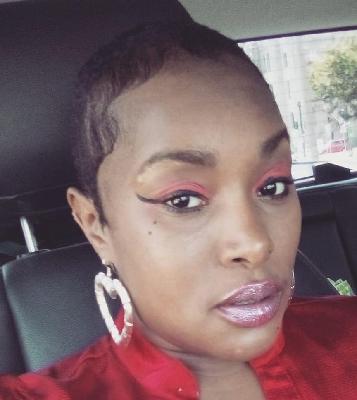
In the early summer of 2003, the life of 26-year-old Caprice Keisha Anderson was tragically cut short in New Orleans. On the evening of June 8th, she was fatally shot in front of her grandmother's home on Lawrence Street. An autopsy later revealed that she died from a single gunshot wound to her forehead, fired from very close range. Evidence of bruising on her body suggested a history of physical altercations.
In the wake of the shooting, suspicion fell upon her boyfriend, Kentrell
Harrell. Witnesses reported hearing a gunshot and seeing Harrell near Anderson's body moments later. He was then seen attempting to get into her car before fleeing the area on foot. Harrell was apprehended by police a few blocks away from the scene later that evening. During his initial interaction with law enforcement, before being informed that there were no eyewitnesses to the shooting itself, he made a statement to the effect that they would not be able to prove he killed her.
The investigation uncovered a troubled and violent relationship between Anderson and Harrell. Friends and family of Anderson revealed that she had been physically abused by Harrell in the past and that he had recently threatened to kill her. The night before her death, the couple had reportedly argued. On the day of the fatal shooting, Anderson had planned to meet with Harrell to return his belongings and had expressed fear that he would become violent. A search of Harrell's residence produced ammunition that matched the caliber and manufacturer of the bullet that killed Anderson.
Kentrell Harrell was subsequently arrested and charged with the second-degree murder of Caprice Anderson. In August 2006, after a three-day trial, a jury found him guilty as charged. He was sentenced to life in prison without the possibility of parole, probation, or suspension of sentence. Harrell later appealed his conviction, arguing that the evidence was insufficient to prove he was the shooter, but the court upheld the jury's verdict, affirming his life sentence.