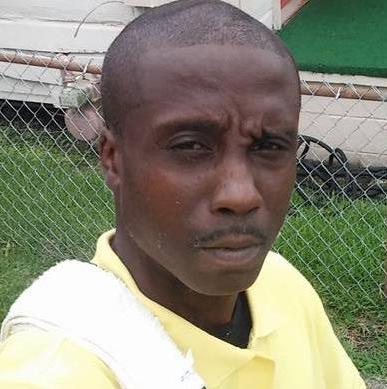
Koruth Mangle, 43, male, died on April 2, 2014, in Harvey, Louisiana, in a moment that tore through the ordinary quiet of a family home and left everything after it feeling unreal. It was late, the kind of night where the walls and doors are supposed to mean safety, where sleep settles in upstairs and the downstairs is simply part of the house waiting for morning. But that sense of security didn’t hold.
Something violent came to the front door, something loud enough to break the boundary between inside and outside, and in seconds the calm turned into panic.
His parents were upstairs asleep when the sounds began—banging at the front door, the kind that doesn’t belong to a harmless visitor. Before they could make sense of it, gunfire rang out. It wasn’t a long exchange, not a drawn-out confrontation that gave anyone time to react. It was swift and brutal, a sudden eruption that left only shock behind. When his parents rushed downstairs, they found Koruth near the entryway, gravely wounded, the air thick with fear and disbelief. In that instant, the life they knew split cleanly into “before” and “after.”
The scene carried the unmistakable signs of invasion and intention: a front door forced open, violence brought into the home, and Koruth struck down in the very place where families are meant to be safest. Responding deputies arrived and found him unresponsive near the front door. Despite the urgency, despite the desperate hope that there might still be time, he was pronounced dead at the scene. For his family, it meant that the terrible sounds they heard upstairs were not just sounds, but the final moments of a life they loved—moments they would replay over and over, trying to grasp how it could happen so fast, inside their own home.
In the aftermath, the questions would have come in waves. Why this house? Why that night? Was Koruth targeted, or was he caught in something senseless and opportunistic? Authorities treated the killing as a homicide investigation connected to a violent home invasion, yet no motive was identified at the time. That absence of an answer can be its own kind of torment—because grief at least has a shape, but uncertainty is a shadow that follows you everywhere. A family can mourn, but it’s hard to heal when the story feels unfinished, when the reason for such cruelty remains out of reach.
The pain was not only in the loss itself, but in the helplessness that followed. His parents, waking from sleep to the sounds of someone forcing their way in, would have felt the terror of being trapped between floors—knowing something is wrong, moving toward it anyway, and arriving to a reality no one should ever have to face. In those moments, love becomes instinct: a parent rushing toward danger because their child is downstairs. And then love becomes heartbreak: seeing the person you raised and cherished lying near the doorway, and realizing the world has changed forever.
Public information surrounding the case did not include a named suspect or details of an arrest connected to Koruth Mangle’s death. There were no public accounts of charges filed, no court proceedings laid out, no trial verdict that could provide a sense of resolution. Instead, the story remained anchored in the raw facts of that night: an intruder forcing entry, shots fired, a life taken, and a family left behind with memories and unanswered questions. Authorities appealed for help and information, a reminder that sometimes the people who hold the missing pieces are not in a courtroom but out in the community, silent or unsure, holding a detail they don’t yet realize matters.
What endures most, though, is not only the violence but the human weight of it. A man’s life was stolen in the place he should have been protected, and the people who loved him were left to live with the echo of banging at a door and the crack of gunfire as the final sounds that separated them from him. Koruth’s death wasn’t just a statistic on a date; it was the collapse of a family’s sense of safety and the beginning of an unchosen journey through grief, one marked by the hope that someone, somewhere, will speak up and help bring clarity to a night that still doesn’t make sense.