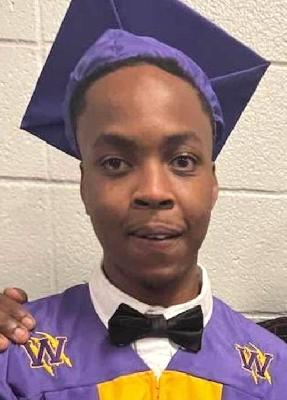
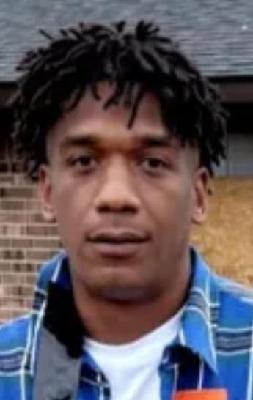
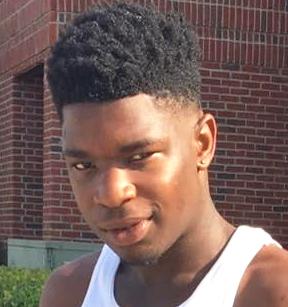
Gardealous Holmes, 27, was a Black man from Monroe, Louisiana, and on March 20, 2015, his life ended far too soon. The date sits like a hard marker in time, the kind that divides everything into before and after. Before, there was a living, breathing person moving through ordinary days, making plans, handling responsibilities, and being woven into the routines of the people who loved him. After, there was shock and the hollow quiet that follows a phone call no one is ever prepared to receive, a loss that instantly reshapes a family’s world.
In the days that followed, the city that had been his home became the setting for his farewell. Those closest to him had to do what grieving families always do when grief is still raw and unreal: gather, decide, organize, and somehow keep standing. Arrangements were made for a visitation and funeral service at Antioch Baptist Church in Monroe, a place where prayers and memories could be shared in the same space. People came in waves—family, friends, anyone who had crossed his path and cared enough to show up—bringing condolences, tears, and stories, each one a small attempt to honor what couldn’t be fixed.
The information known about him includes that he worked as a laborer, a simple description that still speaks volumes. It suggests early mornings, long hours, the steady effort of earning a living and doing what needed to be done. It hints at a person grounded in the real, practical side of life—someone who carried his weight, who worked with his hands, who understood that life is often built one day at a time through effort and perseverance. That kind of work rarely comes with applause, but it matters. It’s the work that supports families, keeps households running, and quietly shapes the backbone of a community.
After the service at the church, he was laid to rest at Magnolia Cemetery in Monroe. Burial is always a finality that doesn’t feel possible in the moment—the last time the people who loved him could physically do something for him, could keep him surrounded by care in the only way left. The cemetery became a permanent place for remembering, a spot that holds the weight of everything unspoken: the conversations that won’t happen, the milestones that won’t be shared, the laughter that won’t return in the same way. Grief changes its shape over time, but it doesn’t vanish, and a gravesite becomes a kind of anchor for that ongoing love.
The details available here do not name anyone responsible for his death, and there is no information included about arrests, suspects, charges, trials, or convictions. What remains, instead, is the undeniable reality of the loss and the outline of what his family was forced to do in response: to gather at a church, to mourn together, to honor him publicly, and then to leave him in the ground while carrying the rest of their love and pain back into daily life.
Gardealous Holmes is remembered through the few specifics that survive in the record—his name, the date of his death, his age, his home in Monroe, the church where people came to say goodbye, the cemetery where he was buried, the note that he was a laborer—and through something even stronger than details: the quiet fact that there were people who loved him enough to come together and grieve him. A death like his does not just remove one person; it changes a web of relationships, leaving ripples that touch parents, siblings, friends, coworkers, neighbors. Even when the public record is spare, the private loss is never small. And even years later, the story of March 20, 2015, still matters, because it marks the day Monroe lost a young man whose life should have continued well beyond that spring.