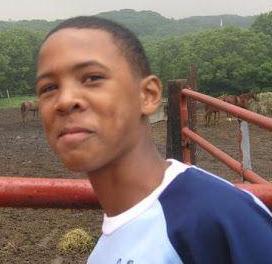
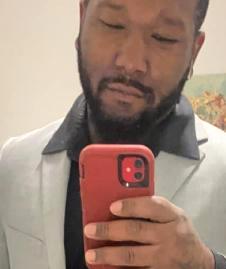
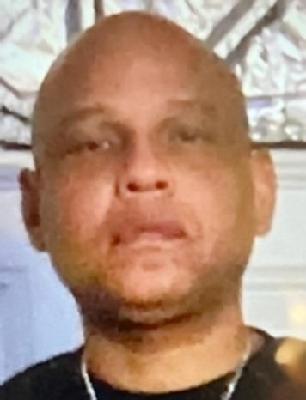
Estavan Pleasant was 52, a Black man, whose life ended on January 25, 2018, in New Orleans, Louisiana. The morning was still young when violence found him on Beau Street, in the 7300 block, in the quiet stretch of hours just after dawn when most people are only beginning to stir. What happened in those moments wasn’t the kind of thing a neighborhood forgets.
The sharp, sudden crack of gunfire cut through the air, and when Seventh District officers arrived, they found Pleasant down in a driveway, struck by multiple gunshots. In a place meant to feel like refuge, he lay wounded in the open, the kind of sight that makes time seem to slow and the world feel unreal.
There is a particular cruelty to a death that comes early in the day, when the light has barely settled in and the city is still half-asleep. Pleasant was rushed from the scene to a hospital, carried forward by that desperate hope that it might not be too late. But the injuries were too severe. Later that same day, he was pronounced dead, and the hours that followed became a dividing line—before and after—for the people who loved him, for the street that would bear the memory, and for a city that knows too well how quickly a normal morning can turn into a tragedy.
In the immediate aftermath, detectives treated the shooting as an active homicide investigation, working to piece together what led to the gunfire and who was responsible. Scenes like this become puzzles built from the smallest fragments: what was heard, what was seen, who was nearby, what direction someone ran, what might have been said or threatened, and what could have been missed in the chaos. The public details were spare, the kind that outline the skeleton of an event without offering the heart of it. Yet behind that brevity is the reality of what an investigation means—officers canvassing for answers, the slow gathering of evidence, and the difficult task of trying to make sense of a life taken in an instant.
While investigators worked to identify a motive and the person or people who fired the shots, Pleasant’s family and friends were left to face the most painful part: the sudden absence. An obituary described him not as a case number or a headline, but as a beloved son and a father, a man whose place in the lives of others was permanent even if his time was not. Those words carry a quiet truth that law enforcement updates can never hold. They speak to the everyday roles that vanish when someone is killed—the phone calls that will never be returned, the seat left empty, the plans interrupted, the love that has nowhere to go but into grief.
For the public looking in from the outside, the story can feel unfinished, because the most urgent question remains: who did this, and why? In the available information connected to this death, there are no publicly described arrests, no named suspects, and no public record of charges tied to Pleasant’s killing. That lack of resolution has its own weight. It means someone, somewhere, may still hold the truth of what happened on Beau Street, and it means the people who cared about him may still be living with unanswered questions—questions that echo in quiet moments and return on anniversaries, when the date alone is enough to bring everything back.
What is known, and what cannot be softened, is that Estavan Pleasant’s final morning ended in violence and urgency, in sirens and hurried footsteps, in the desperate rush to a hospital and the finality of the words pronounced dead. What remains is the imprint of a person—son, father, loved one—whose life mattered beyond the brief public account of how it ended, and whose death left a space that cannot be filled, only carried.