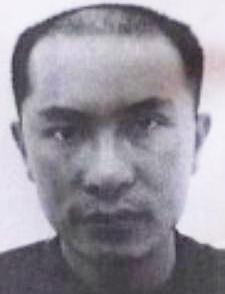
Chang Z. Qui, a 41-year-old Asian man, was working another Friday evening shift at the See Thru Chinese Kitchen on Chicago’s West Side when Halloween of 2014 turned from routine to catastrophic. The carryout restaurant on the 5200 block of West Madison Street, in the Austin neighborhood, was the kind of place where people stopped in for a quick order and familiar faces behind the counter. Around 7 p.m.
on October 31, a gunman walked in and demanded money, turning the small, fluorescent-lit space into the scene of an armed robbery. In the chaos of that confrontation, Qui was shot in the back as he worked inside the restaurant.
Outside, Halloween decorations and early-evening traffic gave the street an ordinary backdrop, but inside the restaurant staff and witnesses scrambled in shock as the attacker ran off into the Austin night. Police and paramedics arrived and rushed Qui to Mount Sinai Hospital, where doctors could not save him; he was pronounced dead at 8:02 p.m., according to authorities. He had been commuting from his home on the 3200 block of West Wallace, a reminder that he belonged not only to the neighborhood where he worked, but also to another community across town that would soon receive the news that he was not coming home.
In the days that followed, the restaurant’s glass front and the block around it carried the weight of a sudden absence. The case was added to city homicide rolls as yet another gun killing in a year when Chicago was struggling with hundreds of shootings. Online memorial pages recorded his name, date of death and the simple fact that he had been “lost to gun violence,” while local coverage described relatives appealing for help and a family searching for tips about who had walked into the restaurant and pulled the trigger. For months, the shooter’s identity remained a question hovering over the small business and the people who had worked alongside Qui on that October night.
Nearly four months later, in February 2015, Chicago police announced that they had made an arrest. They said a 26-year-old West Side resident, Deshawn Johnson of the 5200 block of West Quincy Street, had been identified as the gunman who entered See Thru Chinese Kitchen that Halloween evening. According to police and prosecutors, he walked into the restaurant around 7 p.m., demanded money and, during the robbery, shot Qui in the back before fleeing. Johnson was charged with first-degree murder, multiple counts of attempted murder and several counts of armed robbery, including charges tied to a separate liquor-store holdup months earlier in which a shot was also fired.
Court coverage painted a tense picture of the early proceedings. In one widely reported episode, Johnson allegedly bolted from a courtroom during a hearing and briefly escaped into a courthouse hallway before a Cook County prosecutor tackled him and brought the dash to an end, underscoring how volatile the case had become even inside the controlled environment of the courts. Gun violence archives later listed him as a suspect who had been arrested in connection with the shooting, linking the Halloween killing at See Thru Chinese Kitchen to a broader pattern of armed robberies on the West Side.
For those who knew Qui, the story is not only about a robbery gone deadly or the charges filed afterward, but about a worker behind the counter of a neighborhood restaurant whose life ended in the span of a few panicked seconds. The case threads together two Chicago neighborhoods—Austin, where the restaurant sat under the glow of its takeout sign, and the Bridgeport-area block where Qui lived—through a single act of violence. In public records and memorial pages, his name remains fixed to that Halloween date in 2014, a reminder of a night when customers expected to leave with paper bags of food and instead left with the memory of a killing that would reverberate through the city long after the police tape came down.