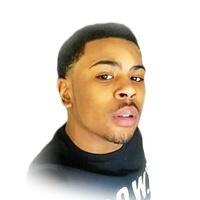
Priest Young, a 20-year-old Black / African American male from Chicago, was known to his family as Priest Jakil Young, a son, grandson, brother and young father whose life revolved around loved ones, sports and ordinary moments that felt big in hindsight. Relatives later remembered him racing bikes with his brother Brandon, cooking Buffalo wings with his stepfather John, and riding to school with his grandfather while they talked about life.
They spoke of his constant energy, his love of basketball, and the way his smile lit up photographs. A tribute written in his honor also remembers his little girl, Peyton, described as “your girl” who looked so much like him, just turning six, a living reminder of the time and memories stolen when he was killed.
On the afternoon of March 29, 2018, early spring light settled over Chicago's West Garfield Park neighborhood as Young sat in a Jaguar with 21-year-old Lovon Jordan in the 4000 block of West Van Buren Street, near Pulaski Road. Around 4 p.m., the block was the kind of everyday city scene where cars rolled past and people moved along the sidewalks—until two armed assailants walked up to the vehicle. Without warning, they opened fire, unleashing a burst of shots into the car. Neighbors would later learn that both men inside were hit multiple times. Jordan was pronounced dead at the scene, while Young was rushed to Stroger Hospital, where doctors could not save him. He died less than a mile from where he lived, the geography of his everyday life suddenly turned into a crime scene.
The violence left behind a trail of grief and fragments: shell casings scattered near the curb, yellow tape fluttering in the breeze, the Jaguar pocked with bullet holes, flashing lights reflecting off its windows as officers and paramedics worked. In news reports and memorial pages that followed, the bare facts of the killing were stark—two young men sitting in a car, two gunmen approaching on foot, a storm of bullets in a matter of seconds—but the impact rippled far beyond that West Garfield Park block. Online tributes tried to fill the gap that statistics leave wide open, sketching out who Young was in life: a young man who loved his family fiercely, who spent long hours with his dad on the basketball court, who did not like to sit still and, as one remembrance put it, “gave life your all.”
In the hours after the shooting, Chicago police confirmed that two people had walked up to the car and fired into it, killing both Young and Jordan, but they did not name any suspects. By the next day, local coverage noted that no one was in custody and that Area North detectives were investigating, a familiar refrain in a city where many shootings never lead to swift answers. Years later, case summaries still describe the same core facts: two armed assailants, a targeted burst of gunfire, and no arrests despite investigative efforts and public appeals for information. Legal advocates have highlighted the case as “unsolved,” and updated case records state plainly that, despite work by detectives and pleas from the family, no one has been charged in connection with the murders of Priest Young and Lovon Jordan.
In the absence of arrests or a named suspect, remembrance has become its own form of resistance to forgetting. On the National Gun Violence Memorial, Young's name appears alongside those of others killed by gunfire on March 29, 2018, with community members lighting hundreds of virtual candles in his honor over the years. A Chicago remembrance project lists him among the dead from West Garfield Park and hosts messages from his mother, who calls him “my son” and writes that she will forever miss him, wondering aloud how she has made it this long without him. In musical tribute, friends and family sing about “twenty years together, twenty years of memories,” invoking scripture and the promise of mercy and justice that outlasts even the longest wait. Community-focused forums discussing his case point to organizations like Chicago Survivors, which walk alongside families after homicides—helping them navigate grief, push for answers and keep their loved ones' names from fading into the background of city violence. For now, the story of Priest Young remains split in two: a rich, crowded life remembered in detail by those who loved him, and an open case file describing two unnamed gunmen who disappeared into the city, leaving a family and a neighborhood still waiting for someone to be held to account.