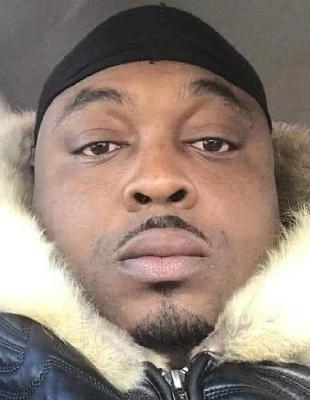
Dwayne Young, a 38-year-old African American man and father of five from the Waukegan area, built his life around family, work, and faith long before a road-rage shooting cut that life short in 2020. He was born in Waukegan in May 1982 and grew up as the first of six children, a role that helped shape him into someone relatives remembered as outgoing, generous, and deeply protective of those he loved. As a teenager he attended Waukegan High School, later earning his GED, and in adulthood he spent nearly a decade working at Naval Station Great Lakes, holding a food service job there from 2008 until 2017. Family and obituary remembrances describe him as the kind of person who hosted gatherings at home, drew people in with his humor, and tried to help anyone who needed it, a presence they summed up by saying that to know him was to love him.
By 2020, Young was a husband and the center of a close-knit household, raising five children with his wife, Carolyn McGowan, and looking ahead to becoming a grandfather. He and his adult son, Dwayne Jr., were planning to open a barbershop together, a small family business they hoped would give them both a new start and provide a place for community connection. According to his family, he worked hard to make sure his children had what he himself had gone without growing up, and he was excited about the imminent birth of his first granddaughter, talking about her name and imagining what it would be like to meet her. Those plans, and the everyday routine of a father driving home late at night, converged with a stranger's anger at a neighborhood intersection in Waukegan.
Late on the night of October 9, 2020, around 11:50 p.m., Young was driving his white SUV near the intersection of 8th Street and Jackson Street in Waukegan when he accidentally rear-ended a maroon sedan in what police and prosecutors later described as a minor collision. The other driver, a Chicago man named Sheldon L. Brown, got out of his car with a. 40-caliber handgun in his hand. Witnesses told investigators that Brown first shot out the tires of Young's vehicle and then turned the gun on Young himself, firing multiple times during what authorities would characterize as a sudden burst of road rage. When officers arrived after reports of shots fired, they found Young lying in the street next to his SUV, gravely wounded. Paramedics rushed him to a nearby hospital, where he died shortly afterward from his injuries; an autopsy confirmed that he had been killed by a gunshot wound.
The investigation moved quickly. Detectives from the Waukegan Police Department's Criminal Investigations Division canvassed the neighborhood and interviewed witnesses, who were able to describe the maroon sedan and identify Brown as the shooter. Officers recovered a. 40-caliber pistol believed to have been used in the crime, and Brown was arrested in Waukegan the next day without incident. Police and local media emphasized that there was no prior connection between the two men; they were strangers whose lives intersected only because of the fender-bender moments before the shooting. Authorities framed the killing as a pure road-rage incident, a split-second escalation from a traffic mishap to lethal violence. Brown was charged with multiple counts of first-degree murder, and a judge set his bond at $3 million, ensuring that he remained in the Lake County jail while the case moved through the courts.
As the criminal case unfolded, more details about Brown's background and the circumstances of the shooting emerged. Prosecutors noted that at the time of the killing he was already out on bond in a separate Cook County weapons case, underscoring their argument that easy access to firearms had turned a routine collision into a deadly encounter. Over the next year and a half, the case wound its way toward trial; Brown cycled through private and public defenders before dismissing them and asking to represent himself. In March 2022, acting as his own attorney, he entered a guilty plea to one count of first-degree murder in Young's death. Two additional murder counts were dropped as part of a partially negotiated plea, but prosecutors made clear that he was not receiving a reduced sentence in exchange; they sought a lengthy term that would keep him imprisoned for most, if not all, of his remaining life.
On September 9, 2022, nearly two years after the shooting, a Lake County judge sentenced Brown to 65 years in state prison. Under Illinois law, first-degree murder sentences must be served in full, with no possibility of parole, meaning Brown is expected to spend the rest of his life behind bars. At the sentencing hearing, Young's wife and eldest son spoke about the ongoing pain of his absence: five children growing up without their father's guidance, a partner robbed of the man she described as a hardworking provider, and a community missing a friend who had once been the life of family gatherings. Prosecutors told the court that Brown's actions showed how a simple fender-bender could explode into a fight for survival when a gun is introduced, and they noted that he still faced a separate murder charge in Cook County for an unrelated incident. For Young's relatives, the sentence could not bring him back, but it marked an acknowledgment by the justice system of the harm done and the life taken on that October night.
In the years since his death, Young's family and community have held onto their memories of him even as they revisit the details of the case in courtrooms and news stories. His wife has recalled how devoted he was to making sure his children “had everything they wanted,” while his son has spoken publicly about the heartbreak of welcoming a daughter knowing his father would never meet her. Online memorials and obituaries portray him as someone who loved big family gatherings, who tried to help anyone who needed it, and whose absence left a visible gap at holidays, cookouts, and everyday moments that once revolved around his presence. Candles lit in his name and tributes shared in local media sit alongside the formal language of police reports and court filings, together telling the story of a man whose life was defined by family, work, and faith, and whose death became a stark example of how quickly an ordinary night on the road can turn into tragedy.