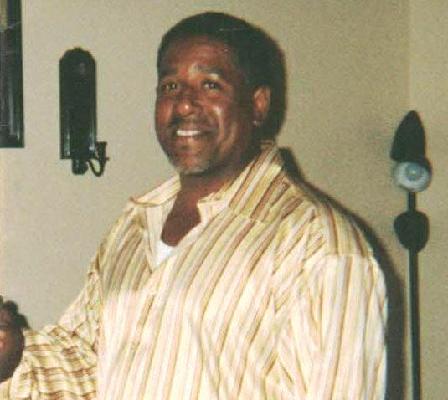
Michael Anthony Johnson, a 50-year-old Black man from Savannah, was fatally shot late on the night of July 10, 2015, at the intersection of 42nd and Montgomery streets. What surfaced afterward in police releases and court records painted the killing as the end of a tense street encounter that began only minutes earlier on Montgomery Street near Victory Drive. According to testimony later summarized by the Supreme Court of Georgia, Johnson was driving when he came into contact with three younger people on foot and on a bicycle. Witnesses said he honked, followed them closely, and then pulled his car in front of them so abruptly that it nearly struck two of them. The confrontation grew more heated from there. One witness said Johnson tried to knock the bicyclist off the road with his car, then reached into his center console before getting out and confronting the group face to face. Moments later, gunfire broke out, and Johnson was struck twice, once in the chest and once in the head. He was taken to the hospital, where he died.
In the first weeks after the shooting, investigators publicly worked through the uncertainty that often follows a street homicide. Police first asked for help locating a young woman they believed may have witnessed what happened. Soon after that, they announced they were trying to identify two young men wanted for questioning in the homicide investigation. The case did not appear to break open all at once, but through the gradual piecing together of witness accounts and surveillance evidence. Court records later said investigators identified one of the men, Jamonie Williams, through surveillance footage, and Williams then identified Nikki Miller and Tyron Henry. Both Williams and Miller eventually testified for the prosecution.
The first major arrest came on September 10, 2015, when Savannah-Chatham Metropolitan Police announced that Tyron Henry, then 20, had been arrested without incident in Platteville, Wisconsin, by U.S. Marshals after being traced to his hometown there. Police said Henry had been identified as the suspect in Johnson’s shooting death and that he was charged with murder while awaiting extradition back to Savannah. Court records later added details that sharpened the suspicion around him: Miller testified that after the shooting Henry was shaken and said he thought he had shot and killed a man, and the Supreme Court opinion also noted that he fled the state after learning police were looking for him.
The legal case that followed was serious and complicated. A Chatham County grand jury indicted Henry on November 24, 2015, for malice murder, felony murder, and possession of a firearm during the commission of a crime. At trial in October 2016, the jury acquitted him of malice murder but convicted him of felony murder and the firearm charge. He was sentenced to life in prison for felony murder, plus five consecutive years on the gun count. Yet the case did not end there. In 2019, the Supreme Court of Georgia reversed those convictions, ruling that the trial judge should have allowed the jury to consider self-defense and defense-of-others instructions. The justices pointed to testimony describing Johnson as aggressive and irrational during the encounter and said the jury should have been allowed to weigh whether Henry claimed he acted in fear for himself or his companions. Because the evidence was legally sufficient, the court said the State could retry him.
The online sources available publicly make clear that there was an arrest, an indictment, a trial, a conviction, and then a reversal on appeal. They also show that Johnson had alcohol and cocaine in his system, facts the appellate court discussed because they were used to support the defense theory that the encounter had turned threatening before the shooting. What those sources do not clearly show is a later final resolution after the 2019 reversal. Based on the publicly available material located online, Tyron Henry remains the central identified suspect and the man who was arrested, prosecuted, and initially convicted in connection with Johnson’s death, but I did not locate a reliable online source showing a later retrial result or final conviction after the Supreme Court sent the case back.