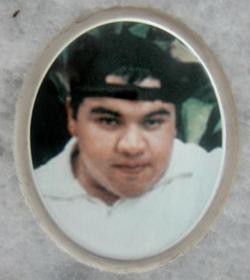
Victor Alvarado, a five-year-old boy from Los Angeles, California, tragically lost his life on April 27, 1999. The circumstances surrounding his death were part of a horrific family tragedy that shocked the community. Victor was one of four family members killed in what initially appeared to be a murder-suicide. However, further investigation revealed a much more sinister plot.
The investigation into Victor's death uncovered that his older half-brother, Saulo Cesar Alvarado, who was 16
years old at the time, was responsible for the killings. Saulo staged the crime scene to make it look like his stepbrother, Renzo Alvarado, had committed the murders before taking his own life. This deception initially misled investigators, delaying justice for the victims.
Saulo Cesar Alvarado was eventually charged and convicted of the murders of his father, Rudolfo Alvarado, his stepmother, Eva Veronica, and his two half-brothers, Renzo and Victor. The case took a significant turn when Saulo's half-sister came forward with crucial information that led to his arrest in 2015. Saulo had been living in Guatemala after being deported following a 2003 rape conviction. He was extradited back to the United States to face charges for the 1999 murders.
In 2018, Saulo was convicted of first-degree murder for each of the four victims. The court also found him guilty of committing lewd acts on a child, which involved another family member. The trial revealed that Saulo had meticulously planned the murders, lying in wait to execute his family members. The judge in the case criticized the initial investigation, citing institutional racism and indifference as factors that hindered the early stages of the case.
Saulo Cesar Alvarado was sentenced to life in prison without the possibility of parole. Despite his age at the time of the crime, the severity of his actions and the premeditated nature of the murders led to this harsh sentence. The judge noted that Saulo would be entitled to a parole hearing in 25 years due to his juvenile status at the time of the killings, but expressed doubt that he should ever be released.
This tragic case highlights the complexities and challenges of investigating familial homicides, especially when initial appearances can be deceiving. The delayed justice for Victor Alvarado and his family underscores the importance of thorough and unbiased investigations in ensuring that the true perpetrators are held accountable.