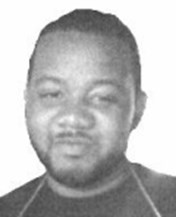
Walter Lewis was gone on February 3, 2026, and the news of it carried the kind of hollow finality that lands like a stone in the chest: a life ended behind locked doors, in a place where the outside world can’t easily see what happens from one hour to the next. He was a 43-year-old White man. What was made known at the time was painfully spare—an unexpected death inside the Elayn Hunt Correctional Center in St. Gabriel, Louisiana—words that sound official and tidy, yet leave the human reality jagged at the edges.
In the immediate aftermath, there was no clear explanation offered that could soften the confusion or give shape to what happened. The manner of death was described as undetermined, and an autopsy was requested, as if the truth—whatever it is—had to be carefully lifted from silence and uncertainty. There was no public account of a specific medical crisis, no confirmed story of violence, no single moment described that anyone could point to and say, This is when it changed. Just a man, a date, a facility name, and the blunt fact that he died there.
That absence of detail does not feel neutral. It feels heavy. It leaves room for too many possibilities and too few answers, which is often what makes loss inside institutions different from loss in the open air. When someone dies in a place built to contain them, the questions don’t stop at grief; they press forward, insistent, because the circumstances are not naturally transparent. An autopsy can measure injury and illness, but it cannot capture the full weight of a final day—the small routines, the brief conversations, the ordinary minutes that suddenly became the last ones.
Walter Lewis’s death was also not presented as an isolated sorrow. It was reported as part of a grim pattern at Elayn Hunt Correctional Center: by the time he died, he was counted as the 18th death since September 23, 2025. Officials acknowledged there had been an uptick in unexpected deaths in recent months, and there were reports of multiple deaths clustered within days of each other in late January 2026. Numbers like that can blur individuals into statistics, but each one is still a person with a name, a history, and people who will carry the loss for the rest of their lives.
And so the story that remains, for now, is defined as much by what is unknown as by what is known. There were no announced arrests connected to Walter Lewis’s death, no named suspect or suspects, and no charges reported as being filed. There was only the promise of an autopsy and the broader scrutiny surrounding a facility already under a harsher light. In that space between statement and certainty, a family’s grief can be forced to live alongside waiting—waiting for findings, waiting for explanations, waiting for someone to say plainly what happened and why.
It is difficult to hold onto the person at the center of it all when the public record offers so little, but that is exactly what matters. Walter Lewis was not just a line in a report, not just part of an “uptick,” not just another count in a tally that rose too fast. He was a man whose life ended on February 3, 2026, in a place where endings can come without witnesses who can speak freely, and where the truth often arrives later, if it arrives clearly at all. Until those answers surface, the only certainty is the loss itself—sharp, unfinished, and aching with the simple human question that follows every unexpected death: What happened to him in his final hours?