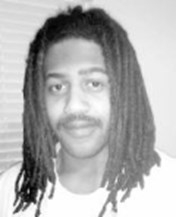
Melvin Yovany Montes, 27, died in New Orleans, Louisiana, and what remains is the hollow space his absence carved into the people and streets that knew him. A life that should have kept unfolding—another morning, another laugh, another ordinary moment that turns out to be precious only after it’s gone—ended too soon. The weight of that is hard to hold: the shock that arrives first, the disbelief that refuses to leave, and the quiet, relentless ache that follows family and friends into every day afterward.
When someone dies young, the grief has a particular sharpness, because it isn’t only about what was lost, it’s also about everything that will never get the chance to happen. The future becomes a closed door. Plans and hopes stop mid-sentence. The people who loved Melvin are left carrying memories that feel both comforting and unbearable—comforting because they still contain him, unbearable because they are all that’s left to reach for. In a city as alive and storied as New Orleans, where music and community and tradition can fill the air, loss can still feel isolating, as if the world kept moving while one home, one circle of friends, one family line stood still.
There is a strange cruelty in how death can reduce a person to a few facts when the truth of them was so much bigger. Melvin was more than a name and a number. He was someone’s family, someone’s friend, someone who occupied a place in the daily rhythm of life—recognized by familiar faces, connected to routines, remembered for gestures and habits that now echo louder because he is no longer here to make new ones. The people grieving him don’t mourn a statistic; they mourn a voice, a presence, a history shared in private moments that will never be replicated.
In the wake of his death, questions naturally gather where answers should be. People want to know what happened, how it happened, why it happened. They want clarity not because it can undo anything, but because it can give shape to chaos. When details are missing or uncertain, the mind tries to fill them in, and grief becomes tangled with frustration, helplessness, and the longing for something solid to hold onto. It is hard to live in that in-between, where the heart knows the loss is real but the story of how it came to be feels incomplete.
What is certain is the human impact: the phone calls made and received, the stunned silence that follows bad news, the way a room changes when someone’s name is spoken with tears behind it. It is the empty seat, the missing text message, the birthdays and holidays that arrive with a shadow. It is the way loved ones cycle through memories—bright ones that briefly lift them, and painful ones that remind them they can’t go back. Grief isn’t linear; it comes in waves. Some days it’s a quiet undertow, and other days it rises up without warning, triggered by a song, a place, a smell in the air that somehow brings him close for a second.
Even without the full public record laid out in front of us, the truth remains that Melvin mattered, and his death matters. A community doesn’t lose someone without leaving a mark. The measure of a life is not in how long it lasted, but in how deeply it touched others, and the sorrow left behind speaks to that depth. People will remember him in stories told softly at kitchen tables, in photos saved and revisited, in the familiar expressions he used, in the way someone else smiles and suddenly resembles him. Over time, grief changes shape, but it doesn’t disappear; it becomes something people learn to carry, folding it into their lives the way you fold a letter you can’t throw away.
Melvin’s name deserves to be spoken with care, not as an afterthought. He was here. He was known. He was loved. And even in the absence of further details, that love is the part that refuses to be erased.