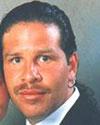
On a hot August afternoon in 1931, the life of 27-year-old Herbert Hasse, a male taxi driver from the Bronx, came to a violent and ambiguous end. His death was the final act in a frantic and bloody ninety-minute saga that began with a payroll robbery and turned into a sprawling, twelve-mile gun battle through the streets of New York City. The incident, which left a total of six people dead, including two police officers and a child, would raise questions about Hasse's role, with his name
simultaneously listed among the perpetrators and the victims.
The chaos began around 3:45 p.m. on August 21st, when two armed men, later identified as John Prechtl and Martin Bachorik, ambushed the paymaster of the Mendoza Fur and Dye Works in the Bronx. In the initial confrontation, they shot and killed Patrolman Walter J. Webb, who was escorting the payroll. The duo then fled in the paymaster's car, sparking a desperate and relentless pursuit by law enforcement. A short distance away, they abandoned the stolen vehicle and commandeered Herbert Hasse’s yellow taxi, forcing him into the role of a getaway driver in a chase that would become legendary for its ferocity.
As Hasse's taxi weaved through the city, a running gunfight erupted between the robbers and the police, who, lacking radios, coordinated their efforts by commandeering other vehicles and clinging to their running boards. The chase claimed its second police victim when Patrolman Edwin V. Churchill was shot and killed. The violence also tragically spilled over to innocent bystanders. A car carrying the Lopez family was caught in the crossfire, and a stray bullet struck four-year-old Gloria Lopez in the head; she would later die from her injuries. The lengthy and chaotic pursuit finally culminated in a hail of bullets on Dyckman Street. It was here, in the bullet-riddled taxi, that Herbert Hasse was found dead, killed by a single gunshot wound to the heart, alongside the bodies of Prechtl and Bachorik.
In the aftermath, the question of Herbert Hasse's involvement became a central point of contention. While he was the driver for the bandits, reports and testimonies painted a conflicting picture of his role. His wife vehemently insisted on his innocence, claiming he was an unwilling participant who was forced into the situation. This assertion was supported by a detective at the scene who stated that Hasse had been unarmed. The uncertainty was perhaps best summarized by Police Inspector Henry Bruckman, who, when pressed by the media, admitted, "I'm not sure about it and I guess we never will be. It will have to be left to the public to decide." Ultimately, no definitive conclusion was ever reached regarding his complicity, leaving the story of Herbert Hasse to be remembered as a tragic tale of a man caught in the crossfire of a violent crime, his true allegiance forever shrouded in doubt.