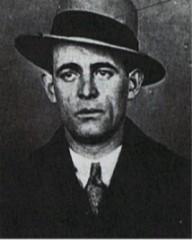
Jack “Legs” Diamond, a 34-year-old Irish-American white man, had built a reputation in the Prohibition era for living fast and outlasting violence that seemed certain to finish him. By late 1931, he was in New York’s Capital Region with the weight of recent court battles still hanging in the air, a bootleg celebrity whose name drew both newspaper attention and the kind of enemies that didn’t need an introduction.
In December, a Troy courtroom set him free again on kidnapping-related charges, and the acquittal turned into a night that blurred into morning. He celebrated in Albany, drifting through the city’s after-hours world and into the Kenmore Hotel’s Rain-Bo Room with showgirl Marion “Kiki” Roberts before he finally made his way back toward the place he’d been staying on Dove Street. The triumph of walking out of court a free man didn’t come with peace; it came with a false sense of safety, the kind that settles in only when exhaustion and alcohol do their work.
Before dawn on December 18, 1931, the violence he’d dodged for years found him in a cramped boarding house bedroom at 67 Dove Street. Accounts of the attack converge on a simple, brutal ending: assassins entered while he lay helpless, and three close-range shots struck just below the left ear, leaving him dead where he’d fallen into a drunken sleep. The coroner’s findings described the attack as intimate and efficient, the kind of killing meant to end rumors about whether the “clay pigeon” could be stopped at all.
The moments after the gunfire were chaos without answers. The proprietor reported two men leaving the building and speeding away in a burgundy sedan with Brooklyn plates, one carrying a flashlight and the other a revolver. Not long after, a. 38 revolver and a flashlight wrapped in silk were recovered from the lawn of St. Paul’s Church, not far from the crime scene—objects that felt like the first tangible leads in a case that would still slip away. When word reached Diamond’s wife, Alice, she rushed to the boarding house and was found beside the body, distraught and repeating that she hadn’t done it, as police and onlookers crowded in.
Despite the immediacy of the response and the swirl of witnesses, the killing hardened into legend faster than it moved toward resolution. Law enforcement openly expressed little sympathy, and the case soon carried the undertone of an execution everyone expected but no one could—or would—pin on a single hand. Over time it became a defining Albany mystery: famous, talked about, and stubbornly unsolved.
No widely accepted arrest or conviction ever closed the file on who pulled the trigger, and the list of suspects has long read like a roll call of grudges. Various accounts and later reporting have pointed to rival underworld figures and factions, including Dutch Schultz and other criminal enemies, while another strand of suspicion moved closer to home—toward Albany’s political machine and the possibility of cooperation or complicity within local law enforcement. One narrative, repeated in discussions of the case, argues that Diamond had become too disruptive for the city’s power structure and was eliminated with the blessing of political boss Dan O’Connell, a theory that remains contested and unproven.
Other speculation tied the motive to money and betrayal rather than turf: rumors held that Diamond had failed to deliver on a high-stakes overseas deal and returned without either product or cash, leaving dangerous men eager to settle accounts. In that version of the story, figures such as Salvatore Spitale and Irving Bitz surfaced as suspects, and the shadow of showing off, promising too much, and coming up empty became a plausible path to the bedroom on Dove Street. Yet even with names, theories, and recovered items, the outcome never changed: the murder stayed officially unresolved, with suspicion spread wide and certainty nowhere to be found.