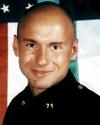
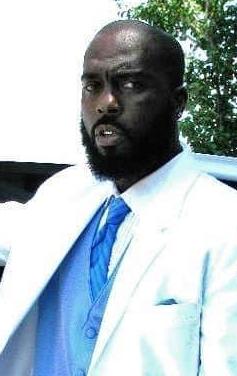
Ronald Falcaro, a 29-year-old man, was killed on October 12, 1979, in Brooklyn, New York, after a seemingly routine day in the car business turned into a death trap. He and another car exporter, Khaled Fahd Darwish Daoud, had been moving vehicles tied to an export pipeline to Kuwait—work that, investigators later argued, brought them too close to a lucrative stolen-car operation.
The trouble started when Falcaro and Daoud began copying vehicle identification numbers, a small act that looked like curiosity to them but read like exposure to the people running the scheme.
According to the government's case, Ronald Ustica—described in later proceedings as the leader of the stolen-car export scheme—saw what Falcaro and Daoud were doing and decided they couldn't be allowed to talk. A promise was arranged to pull them in close: they were lured to a Brooklyn garage with the false pitch that Fred DiNome would sell them part of his excess inventory. Once they stepped inside, the door behind them might as well have been a locked verdict. The courts later recounted the government's claim that Henry Borelli and an unindicted co-conspirator, Roy DeMeo, shot and killed both men. What followed was not just murder but erasure: the bodies were cut apart with boning knives and saws, sealed into garbage bags, and hauled away in a private sanitation truck—an exit designed to leave no body, no scene, and no simple explanation for why two men never came home.
Years passed before the case surfaced in a sweeping federal crackdown. In October 1984, prosecutors filed a massive indictment naming two dozen defendants and alleging a racketeering enterprise tied to a long list of crimes; the stolen-car business and the Falcaro-Daoud killings were pulled into that wider net. A severed trial on the car-theft-and-exportation counts began in late September 1985 and ran into March 1986. In that proceeding, a jury convicted Ustica on multiple charges, and the government pressed a civil-rights murder conspiracy theory under 18 U.S.C. § 241, arguing the killings were meant to stop the victims from providing information or testimony about federal crimes.
The legal aftermath was as tangled as the conspiracy itself. In 1986, reports described a jury finding Borelli and Ustica guilty for the 1979 killings and facing life imprisonment. But on appeal, the Second Circuit ruled that the § 241 convictions could not stand because the evidence at trial was legally insufficient on a key point the statute required: proof of the victims' American citizenship. The convictions on that civil-rights count were reversed, while other convictions—like counts relating to stolen property and conspiracy—remained in place.
Even with the reversal, the consequences for the defendants were severe. The sentencing schedule from the case reflected life terms tied to the § 241 count and long additional terms for stolen-property offenses: Ustica received a life sentence on the § 241 count plus additional years on other counts that were affirmed; Borelli's sentence similarly included life on the § 241 count and lengthy consecutive terms on stolen-property counts. And when the government sought to pursue the § 241 charge again, appellate rulings split the paths: Ustica could not be retried on that count because a reversal for insufficient evidence triggered double-jeopardy protections, while Joseph Testa and Anthony Senter—whose first jury had not reached a verdict on the § 241 charge—could be tried again.
The Falcaro killing did not vanish into paperwork, though; it resurfaced in the later racketeering trial that examined the DeMeo Crew as an organization built on theft, intimidation, and calculated violence. In that later case history, the courts described how Falcaro and Daoud were drawn to the Brooklyn garage and murdered by a group that included Testa and Senter, and they discussed civil-rights murder convictions tied to silencing witnesses and preventing the flow of information about federal crimes. The convictions in that racketeering appeal were largely affirmed, cementing the government's narrative that Falcaro's death was not random brutality but a deliberate act of protection for a criminal enterprise—two men eliminated because they knew too much, and because the people who feared what they might say were willing to make them disappear.