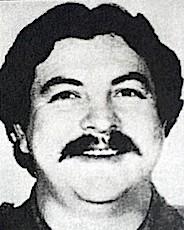
Peter Wong was a 20-year-old Asian man living in New York City when his life was cut short on the night of February 8, 1990. He spent that evening in the dim, smoky confines of Winnie’s Bar, a small but well-known Chinatown hangout on Bayard Street that had been a neighborhood fixture since the late 1980s, a place where regulars drank, talked, and tried to forget the tension simmering outside its doors.
By the time police and medics converged on the sidewalk outside, Peter lay mortally wounded, one of two young men who would not survive the burst of gunfire that shattered the bar’s late-night routine. Another three people were injured in the chaos, turning the cramped room into a crime scene that spoke to a much larger war unfolding in Chinatown’s underworld.
To understand how Peter Wong died is to understand the collision of two powerful street gangs vying for control of Chinatown at the close of the 1980s. One side of that struggle was the Ghost Shadows, a Chinese American gang that had grown from a youth crew into a feared organization involved in extortion, illegal gambling, and violent enforcement along Mott Street and the surrounding blocks. On the other side was Born to Kill, a predominantly Vietnamese gang that rose rapidly under the leadership of David Thai, drawing in disaffected youths and funding itself with brutal robberies and counterfeit watch rackets. The fragile balance of power in Chinatown was already strained when Born to Kill began striking at rival businesses and hangouts, ignoring the traditional order enforced by older tong figures and established Chinese gangs.
On February 8, 1990, that strain snapped inside Winnie’s. Later accounts of Born to Kill’s history describe how a trusted gunman, identified as Thai’s henchman Qui Tran, entered the bar with a specific mission: to execute two men linked to the Ghost Shadows. In the cramped interior where regulars nursed their drinks and picked songs on the jukebox, the attack unfolded in seconds. Shots rang out at close range, and when the echoes faded, Peter Wong and another young man, 19-year-old Dak Leong, lay fatally wounded, marked in gang lore as Ghost Shadows whose deaths were meant as a message as much as a killing. Patrons who only moments earlier had been passing glasses and sharing conversation suddenly found themselves scrambling for cover or frozen in shock as bodies collapsed around them and sirens began to close in.
The murders at Winnie’s reverberated far beyond the bar’s neon-lit doorway. Chinatown’s older power brokers, already wary of Born to Kill’s brazen attacks, saw the double killing as a dangerous escalation that brought intense police scrutiny down on the neighborhood. One influential figure, a long-entrenched Chinatown boss, was said to have demanded a face-to-face meeting with David Thai after the shooting, furious that the killings of Peter Wong and Dak Leong had invited exactly the kind of law-enforcement attention the community feared. That meeting never happened. Instead, retaliation followed: a trusted lieutenant of Thai’s was gunned down in a rival attack, and Born to Kill members began to scatter to outlying neighborhoods and other states, even as the violence they had stoked continued to smolder in and around Chinatown.
For investigators and federal agents watching Chinatown’s gang scene, the Winnie’s Bar murders became one more sign that the street war had crossed a line. In the early 1990s, after months of surveillance and the help of an insider-turned-informant, authorities moved decisively against Born to Kill. A sweeping federal indictment in April 1992 charged David Thai and about twenty members of his gang with racketeering and related crimes, built around a pattern of robberies, shootings, and murders meant to terrorize business owners and rivals alike. Thai was ultimately convicted and sentenced to life in prison without the possibility of parole, while other defendants received lengthy terms ranging from a decade to several decades behind bars. Publicly available accounts, however, do not clearly separate out which specific killings formed the individual counts in those cases, and they do not name a defendant whose conviction can be definitively tied solely and explicitly to the murders of Peter Wong and Dak Leong at Winnie’s.
What remains in the record, then, is a stark but incomplete picture of Peter Wong’s death: a young man caught at the center of a feud between Chinatown’s entrenched Chinese gangs and an aggressive, fast-rising Vietnamese crew, slain in a neighborhood bar that had become an unofficial clubhouse for underworld rivalries. His name survives in lists of gun-violence victims and gang-war casualties, paired forever with that of his friend, the date February 8, 1990, and the dim interior of Winnie’s on Bayard Street. The broader crackdown on Born to Kill ensured that many of the men responsible for the era’s violence would spend their lives in prison, but the public trail of records and reporting never quite circles back to offer a neat, courtroom-style resolution for Peter Wong himself. Instead, his story lingers as part of the larger, haunting narrative of Chinatown’s gang wars—one night’s gunfire woven into a history of fear, defiance, and belated justice that never fully restores the lives it took.