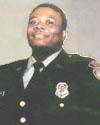
On the last evening of 1996, Amos Williams Jr., a 31-year-old male correctional officer, went shopping at a Kmart in Hyattsville, Maryland. As he returned to his vehicle in the parking lot around 9 p.m., he was confronted by two men intent on robbery. The encounter quickly turned violent when one of the assailants shot Williams in the ankle, causing him to fall to the ground.
As the men went through his belongings, taking his money and jewelry, they discovered his correctional officer's badge clipped to his belt. This discovery tragically sealed his fate. Believing he was a law enforcement officer who could later identify them, one of the robbers then fatally shot him in the head. A passerby later found Williams lying next to his vehicle. Emergency responders pronounced him dead at the scene.
The investigation into the murder of Amos Williams Jr. led police to 18-year-old Aaron Devon Footes and 20-year-old James Albert West. The break in the case came from an unrelated FBI investigation into a series of bank robberies and carjackings, which connected the handgun used to kill Williams to the two suspects. Both men were subsequently arrested in late January 1997 and charged with first-degree murder. The investigation revealed that the suspects had not specifically targeted Williams, but that the robbery escalated to murder solely because they identified him as a law enforcement officer by his badge.
Both Aaron Devon Footes and James Albert West faced trial for the murder of Amos Williams Jr. and were found guilty. In September 1997, a jury convicted Footes of first-degree murder, and he was sentenced to life in prison plus 20 years. Prosecutors believe he fired the fatal shot to Williams' head. Two months later, in November 1997, James Albert West was also convicted of first-degree murder, along with other charges related to the robbery. Prosecutors argued that West shot Williams in the ankle. He too was sentenced to life in prison plus 20 years. The convictions brought a measure of justice to the family of Amos Williams Jr., who was remembered by his colleagues as a bright and ambitious officer.