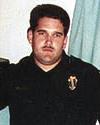
On a cold, chaotic night in early January 1982, Artie Ray Cherry, a 31-year-old male and founding member of the Charleston, South Carolina chapter of the Hells Angels Motorcycle Club, walked into the Rock Hole nightclub outside Rock Hill carrying a long history of war, loyalty, and violence behind him. Known to police not only by his full name but also by the alias “Earl Odine,” Cherry had been living in the shadows for years, wanted in connection with a 1979 killing in Charleston and
rumored to be trying to reassert his influence in the outlaw biker world around the Carolina nightlife scene.
Cherry’s life before that night had already been marked by conflict and survival. He had served in the U.S. Army’s Special Forces in Vietnam, described in contemporary reporting as a former Green Beret who had been wounded in both legs during the war – a detail that hints at how much of his adult life was spent in combat or its aftermath. After returning home, he helped form the first Hells Angels chapter in the Southern states when the Charleston chapter was established in 1976, becoming one of its key figures as the club pushed into new territory. Away from club life, records place him in Lugoff, South Carolina, and genealogical research ties him to Maude Branham Cherry as his mother, with a 1972 marriage license listing him as the groom in a wedding to Darlene Diana Hiatt. Yet whatever domestic roots he might have had were overshadowed by the warrant hanging over him: at the time of his death, Cherry was wanted for the murder of Carl Billingham, who had died after being stabbed in the groin during a fight at a Charleston County nightclub in October 1979, an incident in which four men were said to be involved.
In the early hours of January 7, 1982, the simmering tensions around Cherry, the Hells Angels, and local bar operators finally erupted. The Rock Hole nightclub, described by investigators as a bar frequented by biker gangs, was crowded when a brawl broke out inside sometime around 1 a.m. Two men, Wayne and William Hokum, became the focus of a beating as the fight spread through the room; witnesses later told authorities that the violence escalated when someone tried to intervene on their behalf. In the confusion, gunfire ripped through the bar. Cherry was struck in the head by a bullet, an unidentified man with him took a round in the arm but refused treatment, and the Hokum brothers suffered severe injuries – one with a fractured skull, the other with a badly swollen face.
Paramedics rushed Cherry across the state line to Charlotte Memorial Hospital in North Carolina. Hospital records reported by the press stated that he arrived around 2:30 a.m. with a gunshot wound to the head, and died roughly four hours later despite efforts to save him. Cemetery and headstone databases later recorded his death on January 7, 1982, with his remains buried at Sunset Memory Gardens in Mint Hill, a suburb of Charlotte, underscoring that while the violence erupted near Rock Hill, South Carolina, his life technically ended in a hospital bed across the border.
Investigators moved quickly to identify a suspect. Within hours, police named 41-year-old Charlotte man Mack McClendon Teal as the shooter and charged him with murder in Cherry’s death. Teal was portrayed in later summaries of the case as a man with a long association with local gangs and nightclubs, believed to have controlled the bar where the fight took place. According to those accounts, Cherry’s presence at the Rock Hole that night was not accidental: police would later describe the killing as the result of an apparent attempt by Cherry and his associates to take over the bar from Teal, with the fistfight and the brutal beating of the Hokum brothers serving as the spark that led someone to draw a gun.
Even with a named suspect, the investigation was far from straightforward. Deputies on the scene told reporters that witnesses — many of them bikers or patrons who knew both Cherry and Teal — were refusing to cooperate, leaving detectives with a patchwork of accounts and “sketchy” details about exactly who did what in the chaos inside the club. York County authorities learned that members of the Hells Angels gathered shortly after the shooting to discuss what had happened, fueling fears that Cherry’s death might provoke retaliatory violence in an already volatile world of rival outlaw bikers and bar owners. At the same time, the fact that Cherry himself had been wanted for another homicide complicated the public perception of the case: he was both a victim of a fatal shooting and a fugitive in a separate murder investigation, a man whose life story intertwined military service, loyalty to a notorious motorcycle club, and serious criminal allegations.
From the vantage point of decades later, the official paper trail that can be seen online tells a story that rises sharply and then fades into silence. Contemporary reports and later summaries consistently note that Mack McClendon Teal was arrested and charged with murder in connection with the shooting that killed Artie Ray Cherry, but they do not clearly record how the case was ultimately resolved — whether it went to trial, ended in a conviction or acquittal, or was otherwise disposed of. What remains visible is the outline of a violent night in a biker bar: a decorated but controversial former soldier turned outlaw biker, a local bar figure accused of pulling the trigger, multiple injured men pulled from a smoky club, and an investigation hampered by secrecy and fear. The unanswered questions about what a jury might have decided, or what fate ultimately met the man accused of killing Cherry, leave the story of that night outside Rock Hill with the same uneasy mix of menace and ambiguity that surrounded Artie Ray Cherry’s life in the years leading up to his death.