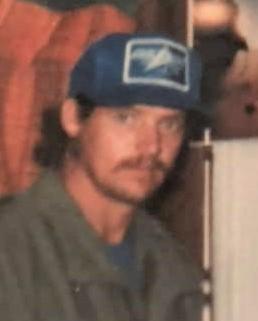
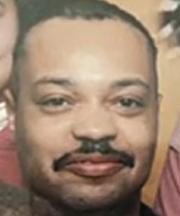
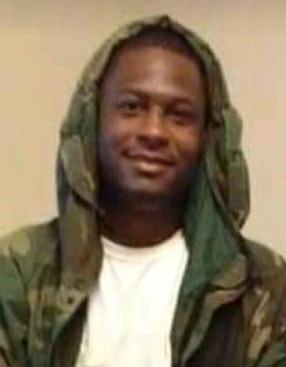
On September 15, 1997, at the R.E. Phelon lawn-mower parts plant in Aiken, South Carolina, David Wayne Moore, a 30-year-old white male, reported for work in the tool-and-die area as he had many times before. A resident of Aiken with a fiancée and close ties to his church and extended family, he was known as a tool-and-die machinist, a skilled position that placed him near the heart of the factory floor.
That Monday afternoon, as shifts changed and workers moved in and out of the plant, there was no public indication that anything about David’s day would be different from any other, or that he and several co-workers were about to be targeted in a calculated act of revenge by a former employee.
The man who would kill him, 43-year-old Hastings Arthur Wise, had once worked alongside people like David but had been fired from his machine-operator job at R.E. Phelon in July 1997 after a confrontation with a supervisor. In the weeks that followed, according to later testimony, Wise nursed deep resentment, feeling wronged by the company and convinced he had been treated unfairly. Co-workers recalled him saying he would “be back.” Court records and later summaries describe him as brooding over the loss of his job, believing that positions he wanted in areas like tool-and-die were going instead to other employees. On the morning and early afternoon of September 15, he followed through on his earlier ominous words, driving to the factory with a semi-automatic pistol and a cache of ammunition, intent on confronting the workplace he believed had betrayed him.
Shortly after 3 p.m., as employees were coming and going in the parking lot, Wise arrived at the plant’s guard station for what was supposed to appear as a routine visit to pick up personal belongings from the security office. Instead, he pulled the pistol and shot security guard Stanley Vance in the chest. Vance would survive, but the attack instantly turned an ordinary shift change into chaos. Wise ripped out the phone lines at the guard station, cutting off one of the plant’s immediate lifelines to outside help, and reportedly told the wounded guard that he “had things to do” before heading into the main building. Having disabled communications and breached the first layer of security, he began moving through the interior with clear intent and intimate knowledge of the layout he had once worked in.
Wise’s first stop inside was the human resources office. There, seated at his desk, was personnel manager Charles Griffeth, the man responsible for firing him weeks earlier. Without warning, Wise shot Griffeth twice in the back, killing him where he sat. Witnesses later described how he then held his pistol to the head of a secretary, tore out her telephone line as well, and walked deeper into the plant. The deliberate sequence—security guard shot, phone lines torn, supervisor executed from behind—showed a methodical mindset. News accounts and trial testimony would later paint a picture of a gunman who was not simply lashing out randomly but following a mental list of grievances as he moved from one part of the building to another.
From the personnel office, Wise headed to the tool-and-die area, where David was working at his station. In that section of the plant, several employees were on duty when Wise appeared and opened fire. He shot repeatedly into the work area, sending metalworkers diving for cover amid the clang of machinery and sudden screams. In the barrage, David and his co-worker Ernest Leonard Filyaw were fatally struck; trial records note that David was shot at his workstation, and later accounts indicate he was hit twice. Two other employees, Lucius Corley and John Mitchell, were wounded, with Mitchell suffering devastating internal injuries that required extensive surgery. Where moments before the space had been filled with the routine sounds of production, it became a scene of carnage, with equipment still running and bodies on the floor, coworkers scrambling to reach exits or help the injured without knowing where the shooter would turn next.
Wise did not stop there. As he moved away from the tool-and-die section, employees throughout the plant began to realize something terrible was happening and tried to flee. Near a doorway stood another co-worker, 27-year-old quality-control employee Esther “Sheryl” Wood. Wise shot her in the back and leg as she attempted to escape; when she fell, he delivered a final, close-range shot that prosecutors would later describe as “execution-style.” Investigators would eventually recover four empty eight-round magazines from the plant, along with four additional loaded magazines and over a hundred extra rounds still in Wise’s possession, a stark measure of how prepared he had been to continue killing had he not been stopped. Witnesses remembered him reloading as he advanced and screaming unintelligibly, adding to the panic of those who were running for their lives.
After stalking through multiple areas of the facility, firing at other employees and shattering glass as he moved, Wise climbed to an upstairs office. There he shot through windows and doors before finally entering a room, lying down on the floor, and swallowing insecticide in an apparent attempt to take his own life. When law enforcement officers reached him, he was semi-conscious but alive. He was taken into custody directly from the crime scene and transported to a hospital under guard, ensuring that the man who had just killed four workers, including David, would live to face trial.
In the months and years that followed, the case moved through South Carolina’s courts. Wise was indicted on four counts of murder, three counts of assault and battery with intent to kill, as well as charges of burglary and possession of a weapon during the commission of a violent crime. At his capital trial, prosecutors laid out the path he had taken through the plant, the prior firing that had preceded the attack, and the deliberate steps he took to isolate the building before opening fire. Multiple employees testified, identifying Wise as the gunman and recounting what they had seen in the human resources office, the tool-and-die section, and the corridors of the factory. Wise offered no witnesses in his own defense during either the guilt or sentencing phase; he told the court he had been in full control of his faculties at the time of the shooting and did not seek mercy. The jury convicted him on all major counts and recommended the death penalty for each of the four murders. He also received long consecutive sentences for the non-fatal shootings.
Appeals to the South Carolina Supreme Court focused on legal issues around jury selection, evidence, and sentencing but did not change the outcome. The high court affirmed Wise’s convictions and death sentences, and when his case reached the United States Supreme Court, that court declined to intervene. In a final act of control over his fate, Wise wrote to state authorities indicating that he did not wish to pursue further appeals, effectively volunteering for execution. On November 4, 2005, a little more than eight years after the shooting at R.E. Phelon, he was executed by lethal injection at Broad River Correctional Institution in Columbia, South Carolina. With his death, the criminal case surrounding David’s murder formally closed, though the loss to families and co-workers was permanent.
For those who knew David, the bare outlines of the legal record—victim in a workplace mass shooting, one of four killed by a disgruntled former employee—could never capture the life interrupted. Accounts gathered in the aftermath described a man rooted in his community, active in a Holiness church, and looking ahead to marriage. He was survived by his parents, a brother, a sister, and maternal grandparents, people who would forever mark September 15 not as a distant news item about workplace violence, but as the day an ordinary shift at a factory stole a son, a brother, a fiancé, and a friend. Over time, the R.E. Phelon shooting would be cited in broader discussions about workplace safety and mass violence, yet at its center was the story of David Wayne Moore and three fellow workers who did not come home, their lives ended in a few terrifying minutes on an otherwise routine afternoon in Aiken.