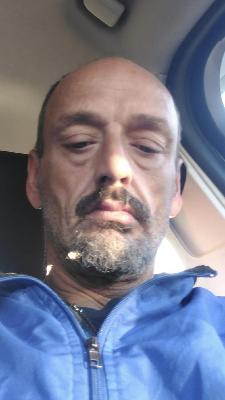
Do you know who murdered James Horton?
James Lee “Jimmy” Horton, a 72-year-old White male from Louisville, Kentucky, was born in nearby LaGrange on February 7, 1944, and spent his life rooted in family ties that stretched across Oldham and Jefferson counties. He was the son of Charles and Estelle Horton, and by the time he reached his seventies he had become the quiet center of a close-knit clan that included a daughter, Lisa Flyne, several brothers and sisters, and many nieces and nephews. His life, like many in the area, moved between the small-town rhythms of LaGrange and the busier streets of Louisville, and in later years he remained connected to both places, carrying with him decades of family history and familiar routines.
On Sunday night, October 2, 2016, Horton found himself in the Saint Joseph neighborhood of Louisville, not far from the University of Louisville campus. That evening, residents along Atwood Street, just off Crittenden Drive, became aware that something was wrong in the narrow alley behind a home. What began as an argument between two men escalated into a confrontation involving knives, the kind of sudden, close-quarters violence that leaves little time for anyone to react. Neighbors later recalled seeing one of the men staggering away from the alley, blood covering his face and running down his arm, a shocking sight on an otherwise ordinary night near campus.
Louisville Metro Police were dispatched to the scene on a report of a “knife fight” in the alley off Atwood Street. When officers arrived, they found Horton critically wounded, suffering from multiple stab injuries to his head and body. Another man, also injured, was located nearby. The alley, bordered by back fences and rear entrances, quickly filled with flashing lights as police sealed off the area and emergency medical crews worked over the two men. Horton was rushed to the hospital, but despite efforts to save him, he died from his injuries a short time later, turning a neighborhood disturbance into yet another homicide in a city already struggling with rising violence.
In the days that followed, detectives pieced together the events leading up to the stabbing, relying on witness accounts, physical evidence from the alley, and statements from the surviving participant in the fight. Within three days of the attack, Louisville Metro Police announced that they had made an arrest: a man named Johnny Estep was taken into custody and charged in connection with Horton’s death. Estep, who had also been injured during the confrontation, received medical treatment before being booked, underscoring how quickly the conflict between the two men had spiraled into mutual, life-altering violence. News reports described the incident simply but starkly — an argument, a knife fight in an alley, one man dead, the other facing serious charges and an uncertain future in the court system.
Horton’s killing became one of the many entries in Louisville’s grim 2016 homicide tally, a year that saw a record 117 killings in the metro area and marked one of the city’s most violent periods in decades. While public reporting clearly records Estep’s arrest and the charges tied to Horton’s death, it does not provide a full picture of what ultimately happened in court, leaving the final legal resolution of the case largely outside the public eye. What is documented instead is the contrast between the modest details of Horton’s obituary — a man remembered by his daughter, siblings, and extended family, laid to rest in the Valley of Rest cemetery in LaGrange — and the chaotic scene in that Saint Joseph alley, where a brief, violent encounter ended his life and added another name to a year already defined by loss.