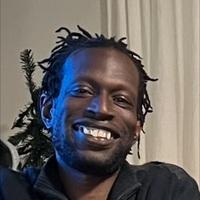
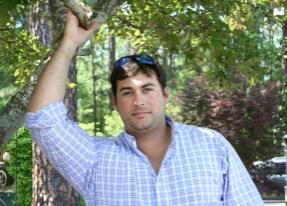
Ryan Murphy, a 36-year-old man, spent much of his life moving between states and even countries as part of a military family, growing up as an “Army brat” who learned early how to adapt to new places and people. Loved ones later remembered him as kind, gentle, and brilliant, with a creativity that seemed to spill into everything he touched. He became an award-winning potter and a talented musician on both guitar and saxophone, and he eventually carved out a niche in the hospitality world,
creating imaginative craft drink menus for high-end establishments around the Southeast. Though his obituary listed Wilmington, North Carolina, as his home base, his final years brought him to Charleston, South Carolina, where friends and colleagues described a warm presence whose originality and kindness left strong impressions on the people around him.
On Sunday afternoon, May 17, 2020, that life was abruptly cut short in West Ashley, a suburban area of Charleston. Deputies with the Charleston County Sheriff’s Office were called to the 800 block of Savage Road after reports of a shooting. When they arrived, they found a male victim suffering from a gunshot wound; he was rushed from the scene to the Medical University of South Carolina hospital for emergency treatment. Despite those efforts, he did not survive, and by that evening the man who had been transported from Savage Road was dead from his injuries.
The following day, the Charleston County Coroner’s Office publicly identified the victim as Ryan Murphy from Charleston and confirmed that he had died at MUSC. In the same update, released Monday night, the sheriff’s office said that Murphy’s injury was an apparent self-inflicted gunshot wound, reframing what had first been reported simply as a fatal shooting into a case without an external assailant. The language used by authorities indicated that, after examining the scene and the available evidence, investigators believed Murphy had caused the wound himself, and there was no suggestion in official statements that they were searching for another shooter or that anyone else had fired the weapon that killed him.
In the days that followed, his name appeared on gun-violence memorial pages that recorded the date and place of his death and linked back to both the sheriff’s initial shooting investigation and the later clarification about the self-inflicted wound, situating his loss within a broader tally of lives ended by firearms. Those remembrances, together with the obituary and online tributes, form the public record of Ryan Murphy’s final chapter: a creative and gentle man whose path had taken him across the United States and Europe, whose talents ranged from ceramics to music to hospitality, and whose story in Charleston ended suddenly on a May afternoon with no suspects pursued, no arrests announced, and no criminal charges filed in connection with his death.