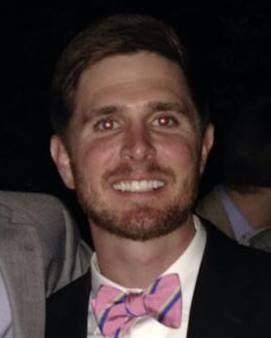
Roy Andrew “Drew” Barr, a 27-year-old male, grew up in the Midlands of South Carolina with a deep, early pull toward public service that would shape his entire short life. Born June 24, 1994, in West Columbia to Roy and Sonia Barr, he later made his home in Monetta while serving the city of Cayce as a police officer. Friends, family, and colleagues consistently described him as someone whose identity was bound up in the uniform he wore; his job, they said, was not just what he did, but who
he was. He had no wife or children, and those who knew him recalled that he poured his time and energy into his work, his family, and a close circle of friends.
Barr’s path to law enforcement began long before he pinned on a badge. At just 14, he started volunteering with the Sandy Ridge Fire Department, learning how to run toward emergencies instead of away from them. He went on to work for Lexington County as a certified emergency medical technician, and he served as a captain with the Monetta Volunteer Fire Department, juggling roles in fire, EMS, and law enforcement that kept him constantly on call for others. In 2016 he joined the Cayce Police Department, and in 2020 he was assigned to the K-9 division, partnered with Molly, a black Labrador retriever trained to track people and locate narcotics. Colleagues remembered how proud he was of Molly, how he lit up when talking about her or demonstrating her work for children at community events. Even after surviving a non-fatal gunshot wound during a 2017 incident involving a car chase and gunfire in Lexington County, he chose to stay in uniform, returning to patrol and K-9 work without hesitation.
In the early hours of Sunday, April 24, 2022, Barr’s commitment drew him to a quiet residential street in Cayce that would become the scene of his final call. Just before 3 a.m., a distressed woman used her Apple Watch to call 911 from a home on Rossmore Drive, reporting that she was being attacked by a man armed with a rifle. Barr and two other officers were dispatched to the address for what was initially described as a domestic disturbance. When the officers arrived, they first encountered a man standing in the front yard — a family friend who had spent much of the day at the house but had left when a domestic argument escalated and made him uncomfortable. He was detained in the yard while officers tried to piece together what was happening inside the home.
As the officers focused on the man in the yard, the danger they had been called to confront shifted to an upstairs vantage point within the house. Investigators later said that 36-year-old Austin Leigh Henderson, a Marine Corps veteran and the woman’s husband, moved to an elevated position inside, shouldered a rifle, and began tracking the officers outside. With what Cayce’s police chief would later describe as a calculated decision, Henderson fired a single round through the darkness, striking Barr and killing him almost instantly within minutes of his arrival. As his fellow officers tried desperately to drag him to a patrol car and get him to a hospital, Henderson fired a second shot toward them, forcing them to take cover and turning the scene into a barricaded standoff.
What followed was a tense, seven-hour siege that drew in multiple agencies from across the region. Henderson forced his wife and young daughter — the same child he had allegedly threatened when he pointed the rifle at them earlier — into a closet, holding them there while officers surrounded the home. Hostage negotiators from the Columbia Police Department worked through the night, trying to coax Henderson into surrender and pleading for the safe release of the woman and child. At some point during the drawn-out negotiations, Henderson allowed his captives to leave the house, stepping out of the role of active hostage-taker but not ending the standoff. Eventually, as officers waited outside and negotiators continued their efforts for a peaceful resolution, Henderson turned the gun on himself, dying from a self-inflicted gunshot wound before he could be arrested or face charges for the killing.
In the aftermath, investigators pieced together a fuller picture of the man who had taken Barr’s life. Henderson, 36, had previously been arrested in South Carolina on allegations of domestic abuse in 2012 and on a drunk-driving charge in 2015, though authorities said neither case led to a conviction. Those earlier arrests, combined with the violence of the April 24 incident and the hostage situation inside the Rossmore Drive home, painted a portrait of escalating volatility that ended without a trial or formal judgment because the suspect died by suicide. The official conclusion of the case left Barr’s friends, fellow officers, and community grappling with a sense of injustice that would never be resolved inside a courtroom.
As Cayce and surrounding communities absorbed the news that Barr had been killed, tributes poured in from across South Carolina and beyond. Fellow officers spoke about his calm presence on chaotic scenes and his willingness to take extra shifts, cover calls, and mentor newer officers. His funeral drew law enforcement agencies from around the state, with a procession of marked units and K-9 teams following his casket from a packed service at the local fine arts center to his burial at Mt. Ebal Baptist Church cemetery. In the months that followed, Barr’s name was added to memorial rolls and, in 2023, he was inducted into the South Carolina Law Enforcement Officers Hall of Fame, enshrining his death in the line of duty alongside other fallen officers and ensuring that the story of his final call, and the life of service that led to it, would not be forgotten.