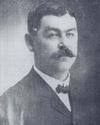
In the fall of 1904, the city of Saint-Louis was bustling with visitors to the World's Fair, an event that attracted not only tourists but also a criminal element. It was in this charged atmosphere that Detective John J. Shea, a 34-year-old officer with the St. Louis Metropolitan Police Department, would meet his untimely end. Born in 1871, Shea had joined the department in 1898 and had risen to the rank of detective sergeant by September of the previous year.
His career was marked by a commitment to justice, a commitment that would ultimately cost him his life.
The trail that led to that fatal encounter began with an audacious train robbery. On August 1, 1904, three men held up an Illinois Central train, robbing passengers and blowing open a safe before disappearing. For months, law enforcement pursued leads with little success. A break in the case came from a former prison guard who tipped off detectives that he suspected three ex-convicts were behind the heist. The suspects were identified as Harry Vaughn, Albert Rose, and William Morris. Investigators tracked the trio to a rooming house at 1324 Pine Street, a location that is now the site of the Soldier's Memorial.
On the afternoon of October 21, 1904, a team of five detectives, including John Shea, converged on the Pine Street address. As they approached, they spotted Harry Vaughn exiting the building and quickly took him into custody. Two of the detectives escorted Vaughn to police headquarters, while Shea and his partners, Detective James A. McCluskey and Detective Thomas M. Dwyer, proceeded to the rooming house to apprehend the remaining suspects. The three officers entered a darkened room and were immediately met with a hail of gunfire.
A fierce gun battle erupted, lasting for approximately five minutes. In the close quarters of the room, the air was thick with smoke and the sound of gunshots. When the firing ceased, the scene was one of carnage. Detective Shea had been struck by two bullets and staggered into the hallway where he collapsed and died. Detective Dwyer was gravely wounded and was rushed to a nearby drugstore before being transported to City Hospital, where he succumbed to his injuries an hour later. Detective McCluskey fought for his life but passed away at the hospital the following day.
The suspects did not escape the shootout unscathed. Albert Rose was found dead at the scene, and William Morris died from his injuries two weeks later. The only surviving suspect, Harry Vaughn, who had been captured before the gunfight, was tried and sentenced to 27 years in prison. His criminal activities, however, did not end with his incarceration. On November 24, 1905, Vaughn played a leading role in a prison revolt that resulted in the deaths of two correctional officers, John Clay and Ephriam Allison. For his part in the deadly uprising, Harry Vaughn and two other inmates were convicted of murder and were hanged on June 27, 1907.