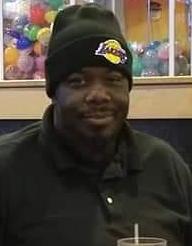
Chad Harral died in St. Louis, Missouri, on July 5, 2020, and the weight of that date is the kind that doesn’t fade with the turning of a calendar page. A life doesn’t end neatly when a headline moves on or when the initial shock quiets down. It lingers in the corners of a home where his voice used to be, in the routines that suddenly feel hollow, and in the small, ordinary places that now carry the ache of absence.
He was a 43-year-old Black male, and he mattered in all the ways
people do when they’re real and present and woven into other lives. Someone knew his laugh well enough to miss it instantly. Someone had a phone filled with messages they can’t bring themselves to delete. Someone caught themselves reaching for him out of habit—one more call, one more check-in, one more “you good?”—only to be met with the truth that there isn’t an answer coming back. Grief has a way of showing up like that, not always as tears, but as muscle memory, as reflex, as the sudden realization that the world kept moving when it had no business moving at all.
St. Louis is a city of neighborhoods and histories, of front steps and corner stores, of people who learn the rhythm of their streets the same way you learn a song—without meaning to, just by living there. When someone dies in a place like that, it doesn’t only touch the people closest to him. It touches the familiar spaces, too. The routes people take start to feel different. The silence after a siren feels longer. July heat becomes tied to a memory that won’t let go. Even those who didn’t know him by name can feel the shift when loss plants itself in a community: a tightening in the chest, a wariness at night, a quiet anger that something so final can happen so suddenly.
There are always questions left behind when someone dies—questions that circle and circle because the mind wants a shape it can hold, something that makes the ending make sense. The heart wants a reason, a story with clean edges, a point where you can say, this is where it changed and this is why. But death doesn’t always offer that. Sometimes all a family and a community are given is the fact of the loss, a date, a place, a name, and the relentless reality that the world is now split into before and after.
What remains is the human part, the part that isn’t captured by dates or locations. The part that lives in how people remember him—how his presence filled a room, how he showed up, how he moved through his days. It lives in the way grief makes you protective of what you still have, and in the way it makes you suddenly understand how fragile everything is. It lives in the stories told softly, the ones repeated at gatherings because saying his name out loud is a way of keeping him close. It lives in the complicated mix of love and sorrow and disbelief, all tangled together.
When someone like Chad Harral is gone, it changes the people who loved him. It changes the way they look at ordinary mornings. It changes the way they measure time, because anniversaries become heavy and random reminders become sharp. It changes the way they listen to the news, the way they lock their doors, the way they pause when they hear footsteps outside. And still—underneath all of that—there is also the stubborn, enduring truth that he existed, he was here, and his life had meaning beyond how it ended.
A name should never become just a line in a record or a detail someone skims past. Chad Harral was not only the fact of his death on July 5, 2020. He was a person with a life that reached other lives, and the hole left behind is proof of that. In the days and years that follow, the grief will change shape, but it won’t disappear. And for those who carry him with them, there will always be a part of St. Louis that feels different—because he should still be in it.